A peeling deck after a rainy summer can look ready for one straightforward fix: strip the coating and repaint. Yet weathered boards, damp joints, and old repairs may react differently once the paint comes off. Across Tallahassee-area neighborhoods, seasonal rain makes that distinction especially relevant when planning exterior maintenance.
Soda blasting paint removal can suit selected surfaces that need a gentler abrasive. It still requires careful evaluation. The right question is not simply whether the paint will come off. It is whether the material underneath will remain suitable for the finish you want next.
What Makes Soda Blasting Gentler?
The abrasive matters, but the surface and application determine the result.
Soda blasting uses sodium bicarbonate media propelled against a surface. The particles break apart on impact and help lift coatings. Compared with harder abrasives, soda can reduce aggressive surface cutting on suitable materials.
That does not make every painted surface a suitable candidate. Wood hardness, weathering, coating thickness, and blasting technique all affect the outcome. Even a relatively soft medium can change fragile material.
For a starting comparison, our explanation of how sandblasting works introduces abrasive surface preparation. When comparing soda blasting with sandblasting paint removal, ask which approach preserves the material and meets the next coating’s requirements.
Start With a Surface Assessment
Before choosing a removal method, identify the material, coating, and reason the finish failed.
Identify What Lies Beneath the Paint
A solid metal component, weathered deck board, and decorative wood trim should not receive an identical removal plan. Previous fillers, thin edges, and weakened areas may respond differently from surrounding material.
Share the coating history if you know it. Explain whether your goal is repainting, staining, or preserving an exposed surface. Each goal changes what an acceptable result looks like.
Separate Moisture Damage From Coating Failure
Peeling paint can accompany repeated wetting, but stripping does not repair a leak or restore decayed wood. Soft boards, loose components, and persistent dampness need evaluation before cosmetic work proceeds.
Our guide to post-storm soda blasting versus sandblasting explains why storm residue and underlying damage require separate decisions.
Planning paint removal in Tallahassee? At Extreme Carpet Care & Restoration, we offer Soda & Sandblasting for residential and commercial projects, with a free assessment. Call 850-422-2227 to discuss your surface, coating, and intended finish. Mention recent leaks, storm exposure, or questionable old paint before work begins.
What Should a Test Patch Reveal?
A useful test evaluates the exposed material as carefully as the removed coating.
Check Removal and Surface Change
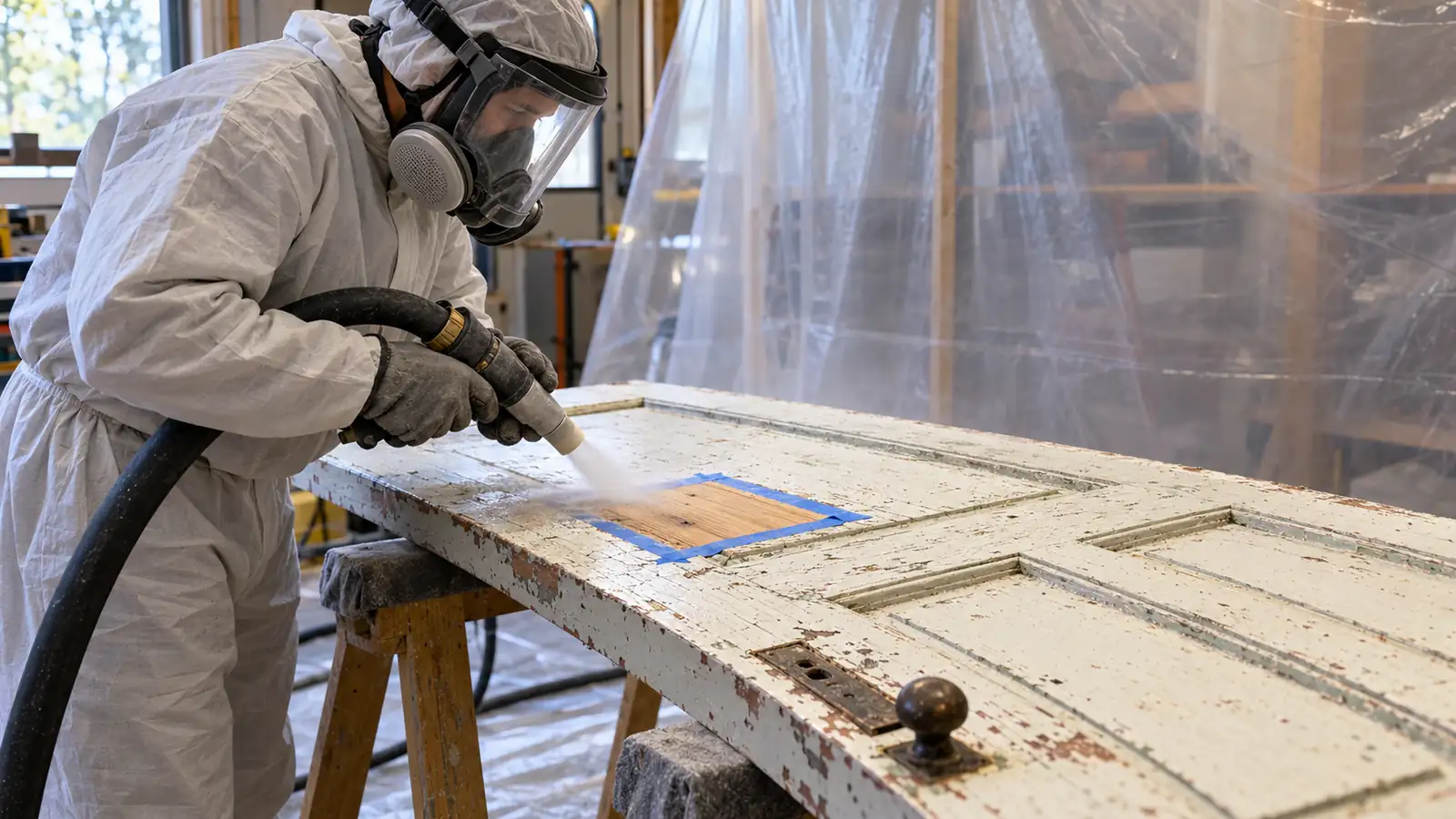
Ask for a small, discreet trial area after coating hazards have been assessed. It should represent the actual project, rather than only its strongest or easiest section. Different materials or visibly different conditions may need separate evaluation.
Review the result for:
- Paint that remains in pores, joints, or recesses.
- Raised wood fibers, deepened grain, or lost edge detail.
- Uneven texture or visible surface erosion.
- Old repairs or deterioration exposed by removal.
Successful removal alone does not justify continuing if the underlying surface is being damaged. Photograph the trial and agree on an acceptable appearance before expanding the work.
Check the Path to Refinishing
Ask what preparation remains after blasting. A surface intended for stain may reveal irregularities that an opaque coating would conceal. Removing paint may also leave texture that needs further attention.
Abrasive paint removal from wood can change surface properties and leave areas needing further smoothing. Treat the test as a preview of the entire refinishing job, including its limitations. A clean-looking patch should also support your intended finish.
Give Weathered Decks Extra Attention
Deck paint removal in Tallahassee should account for moisture exposure and board condition before appearance. A sheltered railing and an exposed walking surface may have different coating wear. Inspect both rather than assuming one successful patch represents the whole deck. Pay attention to joints, board ends, and previous repairs.
Our guide to soda blasting wood and hidden damage explores how stripping can reveal conditions that paint concealed.
If boards feel unstable or show deterioration, arrange qualified repair evaluation. If you rent, coordinate proposed surface work with your property manager before authorizing changes. Removing paint cannot make an unsound deck structurally reliable.
Address Paint Hazards Before Disturbing Coatings
The removed coating can create hazards even when the blasting medium is relatively gentle.
Older paint may contain lead. Do not start a trial blast, sanding pass, or scraping test on questionable coatings without appropriate assessment. Follow lead-safe renovation guidance and seek qualified assistance where lead may be involved.
Ask how the project will address airborne debris, nearby occupants, surrounding surfaces, and waste. The answers should match the coating and setting. Keep children, pets, tenants, and customers away from the designated work area.
When reviewing dustless sandblasting options, remember that a method’s name does not establish that exposure risks have disappeared. Dust suppression does not eliminate the need for appropriate protection and cleanup.
Plan Cleanup and Recoating Together
Paint removal is one stage of surface preparation, not the final approval to repaint.
Soda residue and loosened coating debris need appropriate removal. Remaining contamination can interfere with the next finish. Ask for preparation instructions compatible with the blasting media, substrate, and chosen coating.
Do not improvise an acid wash or assume every surface can tolerate heavy rinsing. Where water is used, account for drying before recoating. Follow the finish manufacturer’s requirements for cleanliness, moisture, and application conditions.
For commercial or occupied rental properties, clarify:
- Which entrances and walking routes the work affects.
- How occupants will receive access updates.
- Who handles debris removal and follow-on preparation.
- What conditions must be met before recoating starts.
These questions help prevent a stripping project from leaving an unfinished surface and uncertain next steps.
Choose a Method Around Your Surface
A useful project discussion connects paint removal with preservation, cleanup, and the intended finish.
Soda blasting paint removal may be appropriate when testing supports it. Another method may make more sense if the coating resists removal or the substrate begins to erode. Ask what would trigger a change in approach.
Ready to plan your project? At Extreme Carpet Care & Restoration, we offer sand and soda blasting for paint removal and surface cleaning. Call 850-422-2227 for a free quote. Describe the material, damaged areas, and desired finish so you can discuss the scope before committing to broad removal. Raise any moisture or old-paint concerns at the start.
Frequently Asked Questions
Can soda blasting remove every type of paint?
No single method suits every coating. Paint composition, thickness, adhesion, and substrate condition affect removal. A representative test helps establish whether soda blasting will remove enough coating without unacceptable surface change.
Can soda blasting damage wood?
Yes, particularly when wood is weathered, soft, thin, or detailed. Abrasion can remove softer fibers and change the grain’s appearance. Stop and reassess if the trial reveals erosion, lost detail, or excessive roughness.
Is sandblasting paint removal better for heavy coatings?
Harder abrasives may remove stubborn coatings more aggressively, but the substrate must tolerate that action. Greater removal power can also increase surface damage. Compare methods through controlled testing rather than choosing solely for speed.
Can a rain-soaked deck be stripped immediately?
Recent soaking calls for a moisture and condition assessment first. Stripping does not resolve trapped dampness, decay, or unstable boards. Coordinate drying and necessary repairs with surface preparation before planning the next finish.
Does a successful test patch guarantee the whole project?
No. Coating thickness, weathering, fillers, and underlying materials can vary across one surface. A good trial guides the decision. Additional checks may be needed where conditions differ or unexpected damage appears.
Can I paint immediately after soda blasting?
-Do not assume a visibly bare surface is ready.
-Residue, remaining paint, texture, and moisture can affect the new coating.
-Complete compatible cleanup and preparation, then follow the coating manufacturer’s application requirements.
What if the old paint may contain lead?
Avoid disturbing it until appropriate assessment and precautions are arranged. Soda blasting does not make lead-containing paint harmless. Qualified lead-safe assistance can help determine the appropriate next steps for the property and project.
Will soda blasting repair storm-damaged boards?
No. Removing a surface coating cannot restore weakened or decayed wood. Storm exposure may leave boards soft, loose, or unstable. Obtain qualified repair evaluation before treating those conditions as routine paint removal.
Is soda blasting a solution for mold after a leak?
Paint removal alone does not address the moisture source or establish that mold cleanup is complete. Resolve leaks and assess affected materials separately. Suspected growth or hidden moisture warrants qualified evaluation before refinishing.
What should I include when requesting a quote?
-Describe the surface material, approximate area, coating history, and intended finish.
-Share photos and mention leaks, storm exposure, access restrictions, or suspected old-paint hazards.
-Ask what the scope includes beyond stripping, especially cleanup and remaining preparation.