Your freshly painted room looks ready for furniture, but stale tobacco odor returns when you open the door the next morning. During humid North Florida weather, leaving windows open all day can also work against moisture control. Another coat of paint is not the obvious next step.
When cigarette smell in your house will not go away, inspect what repainting never addressed. Carpet backing, cushion filling, cabinet interiors, and affected wall materials can remain odor sources. The goal is to locate residue, not keep changing how the room smells.
Why Repainting Can Leave Cigarette Odor Behind
Paint changes a surface’s finish. It does not automatically remove tobacco deposits beneath that finish or elsewhere in the room.
Residue Is Different From Airborne Smoke
After visible smoke clears, tobacco chemicals can remain on surfaces, in dust, and inside porous materials. The term thirdhand smoke describes this remaining contamination. Some compounds can move back into the air, allowing stale odors to persist after smoking stops.
Covering a Surface Is Not Removing Its Contents
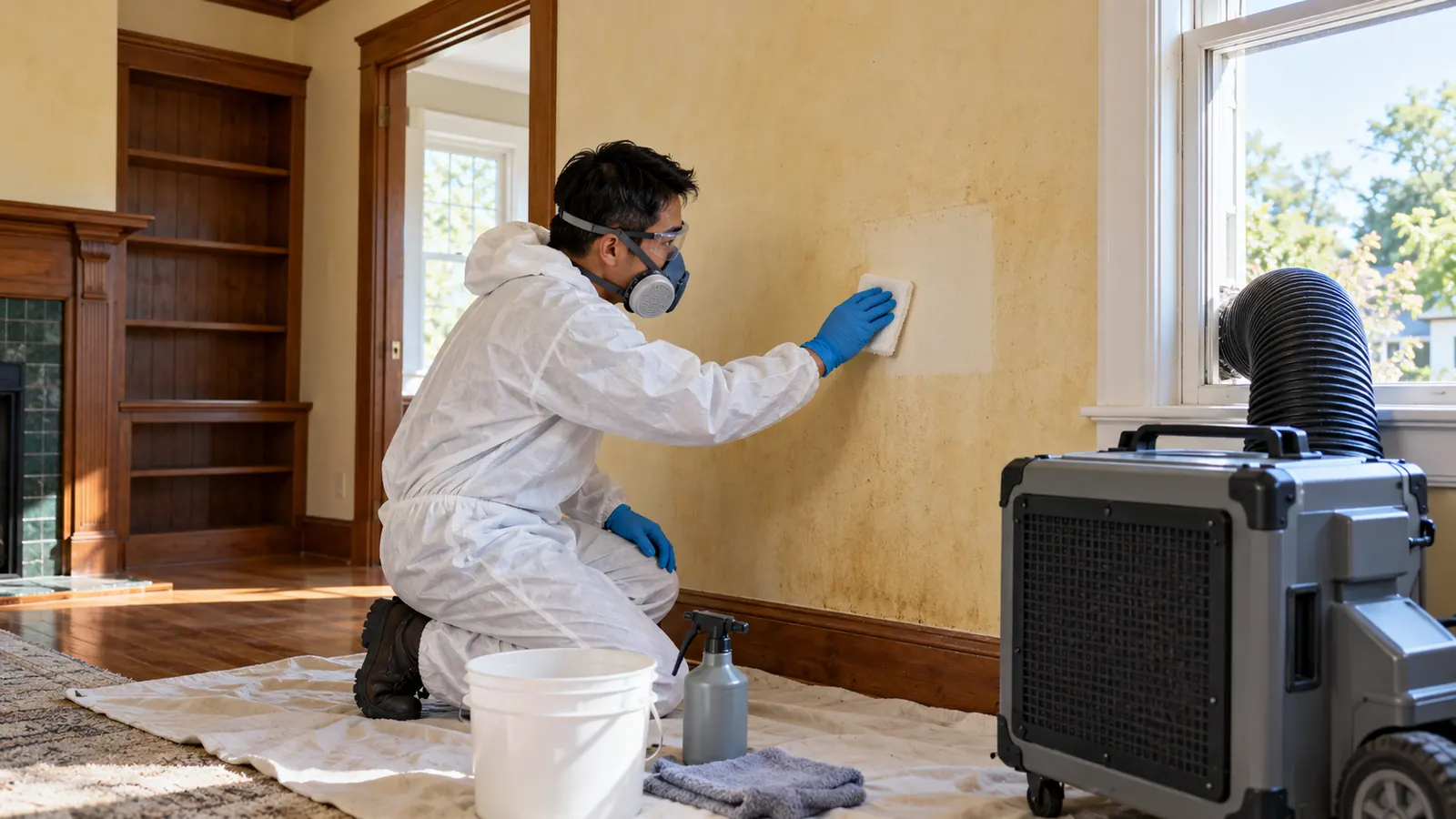
Primers may help limit odor from a prepared surface, but they do not remove embedded tobacco residue. Untreated ceilings, flooring, and furnishings can continue contributing odors. Cleaning smoke-affected painted walls also requires attention to the existing finish before another coating goes on.
Trace Residue Beyond Repainted Walls
Use a room-by-room inventory to separate washable surfaces from materials that may hold residue beneath the surface.
Carpet, Padding, and Upholstery
A clean-looking carpet does not tell you whether its backing or padding retains tobacco residue. Likewise, washing cushion covers does not clean the filling beneath them.
Upholstery cleaning may address accessible dirt and odors, but deeply embedded tobacco contamination may remain. Evaluate fabric, filling, exposure history, and cleaning limitations before deciding whether to retain an item.
Cabinets, Closets, and Overlooked Surfaces
Include ceiling surfaces, shelves, doors, trim, and furniture backs in your inspection. These can escape attention when the work focuses on repainting exposed walls. Record where staining or odor seems strongest without assuming that appearance identifies every affected material.
Keep a simple sketch showing where odors concentrate. If you manage several rooms, record each room separately instead of labeling the entire property “smoke damaged.” This makes it easier to compare what cleaning covered and what remains unresolved.
Useful observations include:
- Odor concentrated around a particular sofa, rug, or closet.
- Yellow-brown film on washable surfaces.
- Areas excluded from previous cleaning or painting.
Airflow and New Smoke Entry
Note whether odors appear when air conditioning starts or near shared walls and entry doors. Air movement may carry odors from another location. That pattern does not prove that ducts require cleaning. Consider ongoing smoke entry as well as old residue before choosing work.
For persistent tobacco odor after repainting, call 850-422-2227 to discuss smoke damage and odor control. Describe the affected rooms, smoking history, previous cleaning, and any damp materials so the discussion addresses residue sources rather than another cosmetic cover-up.
Clean Before Choosing New Finishes
A useful cleanup plan addresses the source, matches methods to materials, and leaves painting until preparation is complete.
Stop New Deposits and Document Conditions
Keep smoking out of indoor spaces. Record affected rooms, visible staining, previous treatments, and items that still smell. For rentals or managed properties, share the record with whoever authorizes repairs before removing fixed finishes or furnishings.
Do not assume every smoky odor comes from past cigarette use. A new burning smell, visible smoke, or signs of overheating require an immediate safety response, not deodorizing. Leave the building and call 911 from outside for suspected fire.
Match Cleaning to Each Material
Launder removable textiles only as their care labels allow. Follow cleaning-product directions and test an inconspicuous area before treating a finished surface. Do not combine cleaning chemicals or saturate drywall, wood, or furniture filling.
Treat smoke cleanup considerations as material-specific decisions. Washing, surface cleaning, and treatment of nonwashable furnishings are not interchangeable. Aggressive scrubbing or excess moisture can create additional repair needs.
Reassess Before Sealing or Replacing
Let cleaned materials dry before evaluating them or applying coatings. An odor-blocking primer may form part of a finishing plan, but it is not proof that embedded contamination is gone.
Replacement becomes a consideration when cleaning cannot adequately address affected material or it remains an identified odor source. Do not replace every carpet or wall automatically. Equally, do not keep repeating surface cleaning when inaccessible layers remain untreated.
For example, repainting a bedroom while leaving a smoke-exposed upholstered chair in place does not address the chair. Replacing that chair without checking stained closet shelving may leave another source untouched. Evaluate the room as a collection of materials rather than a single painted surface.
Avoid Shortcuts That Hide the Problem
A temporary change in smell is not the same as removing its source.
Fragranced sprays can mask tobacco odor without removing residue. Keep temporary smoke-odor measures separate from the actual cleanup plan. A room that smells different immediately after treatment still needs reassessment.
Avoid using ozone generators as household air cleaners. Ozone can irritate the lungs, and concentrations within public-health limits do not effectively remove many odor-causing chemicals. Do not treat a rented machine as a substitute for source removal.
Separate Humidity Problems From Tobacco Residue
Rain-related dampness can create another odor problem that repainting will not solve.
If an interior smells musty after heavy rain, investigate leaks and wet materials instead of assuming that old cigarette residue explains everything. Lingering water-damage odors require attention to moisture sources and affected materials.
Avoid adding unnecessary moisture during cleaning. Use appropriate humidity control, and follow ventilation directions for cleaning and coating products. Leaving windows open to humid outdoor air is not a reliable drying strategy. Resolve wet materials before covering them with fresh finishes.
Define the Scope Before Paying for More Repainting
For cigarette smoke odor removal in Tallahassee, compare proposed work by what it addresses, not by promises of a fresh scent.
A cigarette smoke odor removal company should distinguish surface cleaning, furnishings treatment, potential replacement, and preparation for coatings. Your written scope should identify included rooms, excluded materials, and limitations. Ask how recurring odor would change the next decision rather than accepting repeated deodorizing as the entire plan.
A proposal for wall washing alone differs from one covering ceilings, cabinets, flooring, and furnishings. Compare those inclusions before comparing total prices. Two estimates may address very different amounts of work.
If smoke odor returns after cleaning, revisit missed materials and possible new smoke entry. Reduced odor alone does not establish that all tobacco residue has disappeared. A useful outcome is an informed material-by-material decision, not another coat of paint applied without understanding the source.
Frequently Asked Questions
Why does cigarette odor return after the walls look clean?
Visible cleanliness does not reveal residue embedded in wall materials or nearby furnishings.
Untreated surfaces can continue releasing odor compounds after exposed walls receive attention.
Review what the previous work included before assuming that another wash or coat of paint will resolve the problem.
Can carpet retain tobacco residue without visible stains?
Yes. Tobacco chemicals can accumulate in carpet and underlying layers without obvious discoloration.
Surface appearance alone cannot show whether cleaning reached the affected material.
Include backing and padding in the assessment, especially when carpet cleaning improves the smell only temporarily.
Can smoke-exposed upholstered furniture stay in the room?
That decision depends on the material, exposure history, and whether cleaning can reach the residue.
A washable cover does not make cushion filling or the furniture frame equally washable.
Consider replacement when deeply affected components remain beyond practical cleaning rather than assuming every item is salvageable.
Does odor-blocking primer remove tobacco contamination?
No. A coating can cover a surface or limit emissions without removing contamination inside it.
Cleaning, drying, and checking compatibility still matter before priming.
Do not treat an improved smell or a stain-free finish as evidence that the underlying material no longer contains tobacco residue.
Should you open windows during humid weather?
Ventilation may dilute airborne odors, but it cannot remove residue inside carpets, furniture, or walls.
Humid outdoor air can also complicate indoor moisture control.
Follow product ventilation instructions while managing humidity, and do not rely on open windows as the entire cleanup or drying plan.
What if the smell becomes musty after heavy rain?
Investigate a separate moisture problem instead of assuming all lingering odor comes from cigarettes.
Check for evidence of leaks or damp materials near windows, flooring, and previously affected walls.
Address the water source and drying needs before adding paint or another fragrance treatment.
Does odor during air-conditioning operation mean the ducts need cleaning?
Not necessarily. Air movement can carry odors from affected furnishings or surfaces elsewhere in the property.
Record when the odor occurs and where it seems strongest.
A qualified HVAC assessment can clarify suspected system involvement; avoid spraying cleaners or fragrances into vents.
Should you rent an ozone machine for cigarette odor?
Do not use an ozone generator as a routine household odor-removal shortcut.
Ozone can irritate the lungs, and odor reduction does not demonstrate removal of embedded tobacco contamination.
Concentrations within public-health limits do not effectively remove many odor-causing chemicals, so the machine cannot replace source-focused cleanup.
What should you document in a rental or commercial space?
Photograph staining and record affected rooms, odor patterns, previous cleaning products, and painting dates.
List furnishings and fixed materials that were retained, cleaned, or replaced.
Share these records with the person authorizing repairs so decisions about access, belongings, and further work remain clear.
What should a smoke odor removal company in Tallahassee assess?
An assessment should consider smoking history, affected surfaces, porous materials, and possible new smoke entry.
It should also distinguish tobacco odor from dampness or another source.
The proposed scope should explain cleaning limitations and identify any materials requiring further evaluation before repainting or replacement.