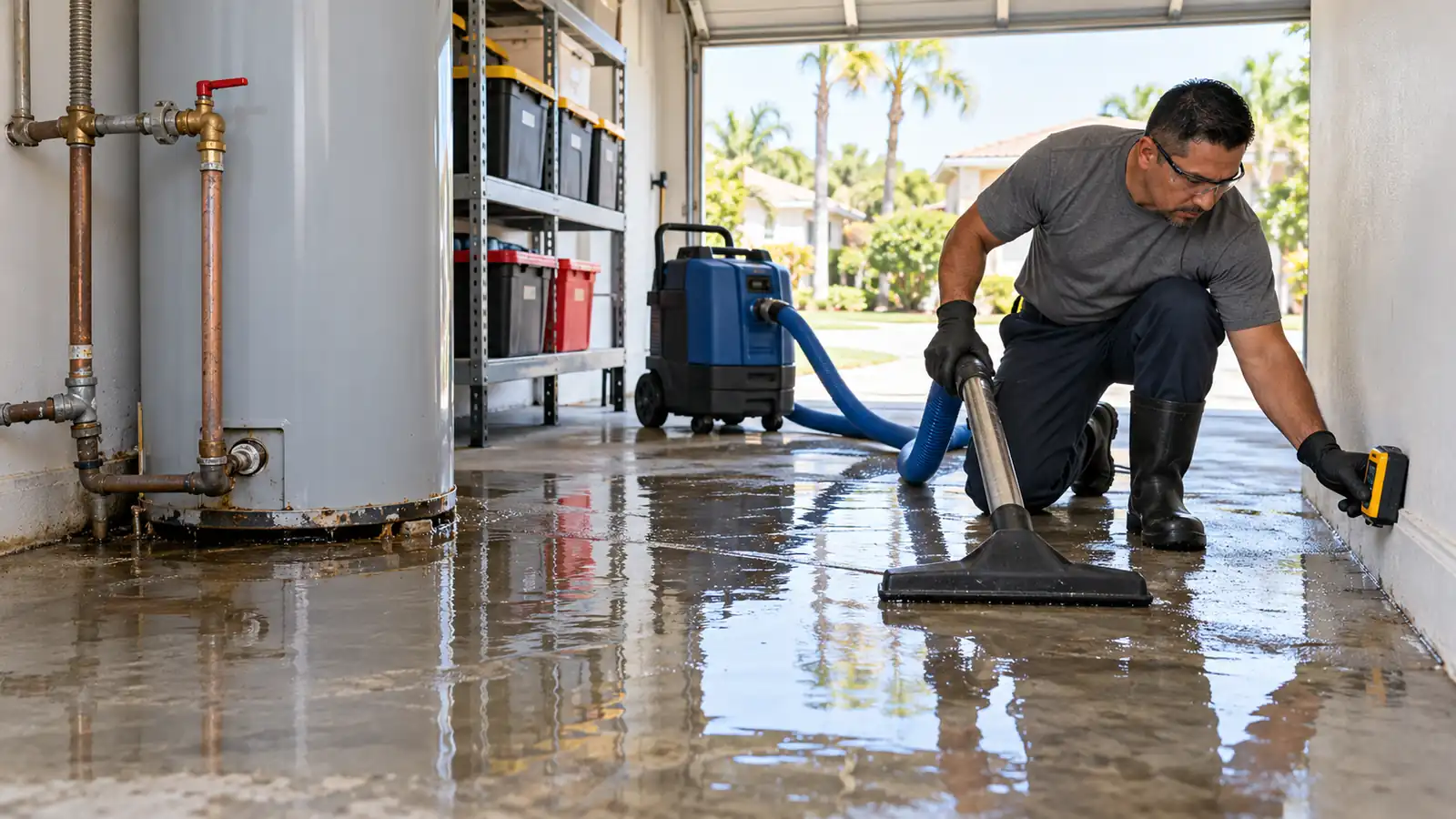
During rainy, humid weather in Tallahassee-area neighborhoods, a wet garage can look like another drainage problem. Then you notice water spreading from beneath the heater toward stacked boxes and the wall shared with your home.
If your water heater flooded the garage, the largest puddle is not the only concern. Water may already be reaching wall edges, stored materials, and adjoining rooms. Start with hazards and source control. Then check where the water traveled before deciding that mopping finished the job.
Check Hazards Before Moving Anything
Your first priority is safe access, not rescuing boxes or testing the appliance.
Electricity, Gas, and Hot Water
Keep children and pets away. Do not enter standing water near outlets, extension cords, appliances, or an electrical panel. Follow flooded-home electrical safety precautions: never operate electrical controls while standing in water.
If you smell gas, leave immediately. Contact the gas utility or emergency services from outside. Do not operate switches or the garage-door opener. Treat water escaping from the heater as potentially hot. Avoid touching discharge pipes or reaching through active leaks.
Water and Energy Shutoffs
For an electric heater, switch off its breaker only from a dry, safely accessible location. Wet electrical equipment requires an electrician. For gas equipment, get professional assistance if you cannot safely identify and operate the appropriate shutoff.
Close the heater’s cold-water supply valve only when you can reach it safely. A plumber may need to isolate the supply elsewhere. Closing the valve prevents additional supply water from entering; water already inside the tank may continue escaping.
Do not restart the heater to check whether it works.
Separate a Heater Leak From Rainwater Intrusion
Water beside the tank does not prove the tank itself failed.
From a safe, dry position, look for dripping supply connections, water around the drain valve, or discharge from the relief pipe. Condensation can also resemble a small leak. Leave diagnosis and repairs to a qualified plumber, and never block a relief outlet.
If a drain pan is present, note water inside it or overflow onto the floor. A pan does not confirm that nearby materials stayed dry.
A flooded garage after heavy rain needs a broader check. Look for an entry path beneath the garage door, along exterior walls, or near a backed-up drain. More than one source may contribute. Outdoor floodwater may contain sewage or chemicals. Flood and storm damage restoration involves different cleanup considerations than an isolated plumbing leak.
Do not judge contamination by clarity or smell alone. A supply leak can also pick up contamination after crossing a dirty garage floor. Keep away from water that has contacted spilled automotive fluids or backed-up wastewater.
Protect Wall Edges and Stored Belongings
Once hazards are controlled, focus on materials that water can reach next.
Trace the Route Toward Living Spaces
Inspect the wall-floor junction, storage-cabinet bases, and the doorway into your home. Check the adjoining room from its dry side. Look for damp carpet edges, swollen trim, or changes around flooring seams.
Stopping water from spreading requires checking these routes, not just the puddle around the tank. Do not assume a raised heater platform protects nearby walls.
Move Dry Contents Out of the Path
Move reachable, dry belongings to a dry location without crossing water. Prioritize paper records, cardboard boxes, textiles, and items resting directly on the floor.
Check underneath bins and the lowest shelf once you have safe access. Water can linger where stored items meet the floor. Avoid moving heavy cabinets or disturbing anything that could expose you to wiring or contaminated water.
Keep wet belongings separate from unaffected contents. Do not carry dripping boxes through clean rooms or seal damp fabrics inside storage bins. Leave wet electrical tools disconnected for qualified evaluation.
For water heater leak cleanup in Tallahassee, call 850-422-2227 to discuss residential water damage restoration, including water removal and drying. Describe any affected wall edges, flooring, or stored belongings. Keep out of unsafe areas and arrange a separate plumbing evaluation to address the heater.
Inspect Drywall Before Choosing Repair or Replacement
The condition of the wall matters more than the size of the remaining puddle.
Check for bubbling paint, darkened lower edges, swollen seams, and soft or crumbling areas. These are warning signs associated with water-damaged drywall. Avoid cutting walls open yourself when wiring, contamination, or hidden damage may be involved.
Material-specific water-damage cleanup guidance distinguishes between materials that may dry in place and those requiring replacement:
- Intact drywall after clean-water exposure: Drying in place may be possible when there is no obvious swelling and seams remain intact.
- Swollen or deteriorated drywall: Removal and replacement may be necessary.
- Wet fiberglass or cellulose insulation: Replacement is generally appropriate rather than assuming surface drying restored it.
Contaminated water changes these decisions. A clean-looking wall face does not establish that the cavity behind it is dry or suitable to retain.
Treat a Dry-Looking Floor as Unfinished Cleanup
Water removal and material drying solve different parts of the problem.
You can have water damage without visible standing water when moisture remains beneath flooring, behind trim, inside wall cavities, or under stored items. Concrete that looks lighter after mopping does not confirm that neighboring materials have dried.
A thorough water damage restoration process may include extraction, drying, and dehumidification. Opening the garage door is not a complete drying plan, especially when outdoor air is humid.
Do not start fans before determining whether the water is clean or sanitary. Visible mold or suspected contamination requires a different approach. Do not paint, reinstall flooring, or push cabinets back against damp walls.
A small, promptly controlled leak confined to an accessible hard surface may need limited cleanup. Water reaching insulation, wall cavities, adjoining rooms, or layered flooring warrants professional assessment.
Ask which materials remain wet and what supports the drying decision. The drying plan should identify affected materials, access limitations, and areas needing further checks. A completed plumbing repair does not establish that the wall or flooring has recovered.
Document the Loss and Reduce Repeat Damage
A clear record helps separate the appliance problem from the damage it caused.
When safe, photograph the heater, water paths, wall bases, and affected belongings. Note when you discovered the leak, whether rain occurred, and when the water stopped. Save repair and cleanup records. For a rental or managed property, notify the responsible contact promptly.
After recovery, practical water damage prevention steps include a leak alarm near the heater, accessible shutoffs, and regular checks for drips. Follow the heater’s maintenance instructions. Keep vulnerable storage elevated without blocking appliance access or ventilation.
The job is not finished when the puddle disappears. It is finished when the source is corrected, affected materials receive appropriate drying or replacement, and storage returns to a dry space.
Frequently Asked Questions
1. Why is water still escaping after I close the supply valve?
Closing the inlet stops incoming supply water, not water already held in the tank. An unsuccessful shutoff or another leak can also keep the floor wet. Keep the heater off and have a plumber confirm source control without restarting it.
2. Do I need a plumber, restoration help, or both?
A plumber diagnoses and repairs or replaces the heater. Restoration work addresses water removal and affected materials, which may remain wet after the repair. You may need both when water reaches wall cavities, flooring layers, or stored contents.
3. Can wet garage drywall dry without removal?
Intact drywall exposed to clean water may sometimes dry in place when it has not swollen.
Deterioration, damaged seams, contaminated water, or wet material behind the wall can change that decision. Check the entire affected wall assembly before repairing the visible surface.
4. Can water damage remain after every puddle disappears?
Yes. Moisture can remain behind trim, inside wall cavities, beneath flooring, and underneath storage. Watch for swelling, renewed staining, persistent dampness, or musty odors. These signs warrant further assessment, but their absence does not prove that concealed materials are dry.
5. Will opening the garage door dry everything in humid weather?
Not necessarily. Humid outdoor air may contribute moisture rather than support effective drying.
An open door also does not establish that insulation, wall cavities, or flooring layers have dried.
Drying decisions should account for humidity, affected materials, and safe equipment use.
6. What changes if heavy rain also flooded the garage?
A mixed-source loss requires checking both the heater and outdoor entry paths. Runoff or backed-up wastewater can introduce contamination that changes cleaning and disposal decisions. Repairing the heater alone will not correct drainage problems or dry everything the storm affected.
7. Can wet boxes, rugs, and upholstered furniture be saved?
Do not treat every stored item the same. Paper packaging and deeply soaked cushioning may be difficult to clean or dry, especially after contaminated-water exposure. Salvage depends on material condition, the water source, and access for thorough drying, not just a clean-looking surface.
8. Is water from a leaking heater automatically clean?
No. Its original source does not describe everything it contacts after leaving the appliance.
Water may cross dirty flooring, mix with runoff, or contact chemicals stored in the garage.
Avoid assuming ordinary mopping or a household fan is appropriate when contamination is uncertain.
9. Can I restart the heater once the garage floor dries?
A dry floor does not establish that the heater’s controls, wiring, or other components are suitable for use. Do not operate a heater that has been submerged or extensively flooded. Have a qualified professional evaluate it; flood damage may require replacement.
10. What should you document in a rental or shared property?
- Record the discovery time, visible water paths, affected storage, and any adjoining rooms showing damage.
- Notify the landlord, property manager, or designated maintenance contact promptly and keep written records.
- Document safe shutoff actions and repair visits without entering hazardous areas to gather evidence.