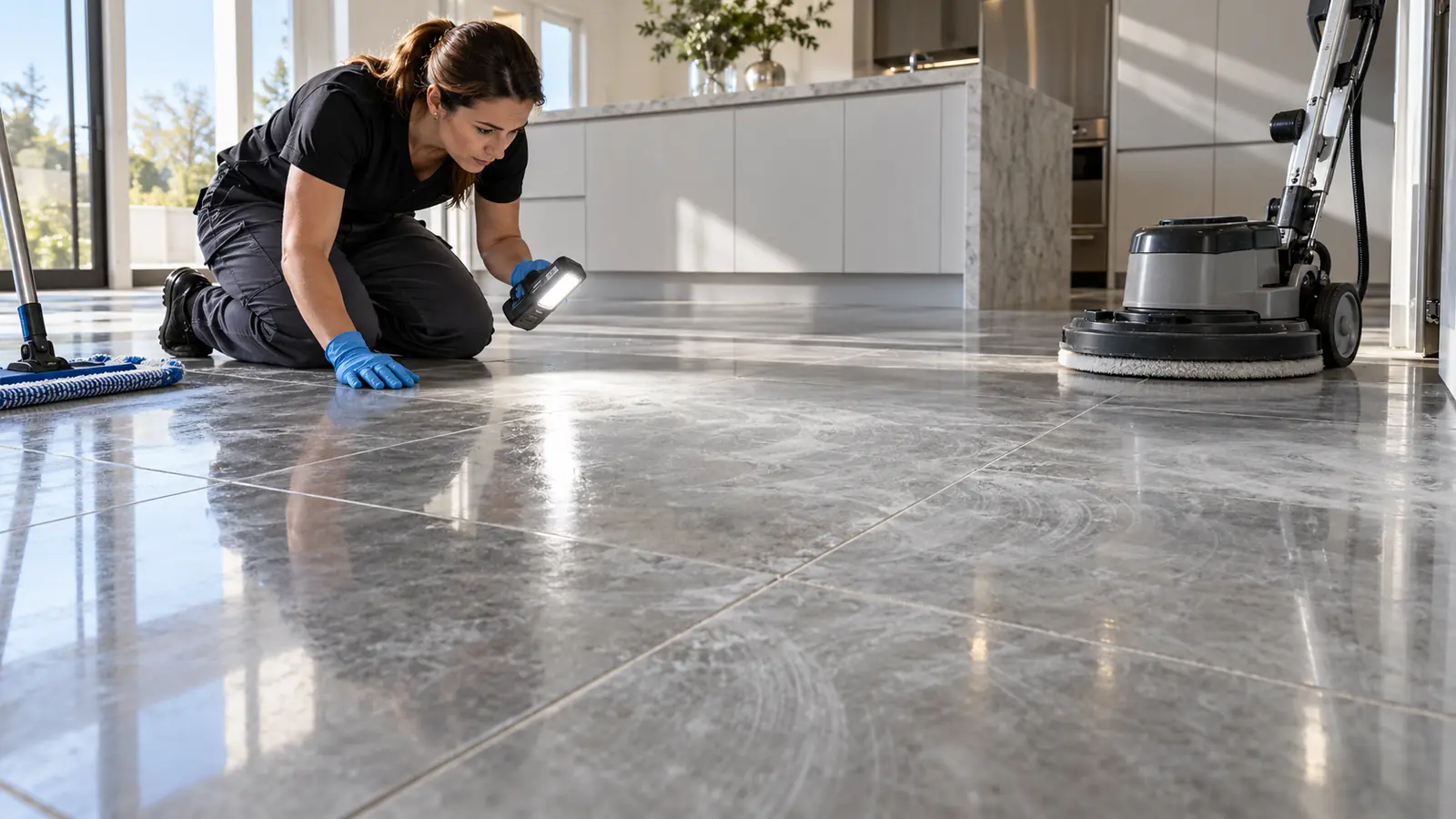
Your kitchen tile looks clear while wet. Once it dries, pale streaks return near the refrigerator and back door. During rainy stretches in Tallahassee-area neighborhoods, tracked-in grit and damp footprints can prompt more frequent mopping. Yet another wash may leave the floor looking worse.
When your tile floor looks cloudy, leftover cleaner is one possible cause. Mineral deposits, installation residue, and damaged finishes can create similar appearances. Before adding a stronger product, work out whether you are removing a surface film or dealing with a different problem.
Why Repeated Mopping Can Leave a Cloudy Film
Check both how much cleaner you apply and how thoroughly you remove the dirty solution.
Too Much Cleaner Stays Behind
An extra splash of concentrate does not necessarily improve cleaning. If detergent remains after washing, it can dry into streaks or a dull film. Repeated applications can add to the buildup.
Following mopping practices that limit residue means measuring concentrated products instead of estimating. Do not dilute ready-to-use cleaners unless their instructions require it. Avoid layering different cleaning products over an unexplained haze. Never mix cleaning products.
Dirty Water Redistributes Soil
A dirty mop and bucket can spread loosened soil across the room. The floor may look freshly washed while wet, then reveal streaks after drying.
Cleaning needs a removal step, not just a wetting step. Change dirty water, rinse mop heads, and remove the remaining solution rather than allowing it to dry in place. Keep foot traffic off wet areas.
Check the Tile Before Testing the Haze
Identify the surface and its maintenance requirements before choosing another chemical or cleaning tool.
Ceramic and Porcelain Tile
- Choose products approved for the tile, grout, and any existing sealer.
- Follow dilution, application, and rinsing instructions. Polished surfaces need particular care with abrasive tools.
- Photograph the dry haze and note when it appeared.
- A change after switching cleaners suggests a different starting point than haze that appeared immediately after grouting.
- Do not judge matte tile against glossy tile elsewhere in the building.
- Aim for the intended, even finish, not extra shine from a new coating.
Natural Stone
Marble, limestone, and travertine need different care from manufactured tile. Acidic cleaners can etch stone, leaving dull areas that another rinse will not repair.
- Use material-specific tile and stone care rather than a universal household recipe.
- Choose a compatible neutral cleaner and rinse thoroughly.
- Do not assume vinegar, lemon juice, or abrasive powders are suitable.
Try a Small-Area Rinse Before Another Full Mop
A controlled comparison can help you decide whether routine cleaning residue is contributing to the haze.
Use this approach only on an intact floor with ordinary housekeeping residue. Skip it when sewage, floodwater, active leaks, or electrical hazards are involved.
- Remove dry debris. Sweep gently or vacuum with an attachment suitable for the floor.
- Choose an inconspicuous patch. Keep an adjacent area untouched for comparison.
- Wipe with clean water. Use a clean, damp microfiber cloth if the floor’s care instructions permit it. Avoid pooling water.
- Lift away the moisture. Use a fresh cloth rather than spreading the same dirty solution farther.
- Compare after drying. Check both areas under the same light. Stop if the surface changes color or becomes duller.
Improvement suggests removable residue, but it does not identify every ingredient in the film. No improvement does not automatically mean replacement. Persistent buildup may need a compatible removal product, while etching or installation haze requires a different approach.
For persistent haze or kitchen grout discoloration, call 850-422-2227 to discuss tile cleaning in Tallahassee before applying stronger chemicals. Describe your tile, products already used, and any recent leak or flooding so the discussion starts with the right cleaning or moisture-related concern.
Why Kitchen Grout Discoloration Needs Separate Attention
The tile face and the grout joints may hold different kinds of residue.
Cement-based grout is porous and can absorb stains. Recessed joints also collect soil that a flat mop passes over. Detergent left behind can combine with dirt, creating a sticky film and making grout look darker again.
Use a grout-compatible cleaner and a soft brush when permitted, then remove the loosened soil and rinse. Avoid oil- or wax-based products that leave additional film. Persistent discoloration does not, by itself, confirm mold.
Compare the pattern: buildup along walking routes suggests a different investigation than damp grout concentrated beside an appliance. Record both the location and whether the joints dry normally.
When Cloudiness Is Not Routine Cleaner Residue
Recurring powder, recent installation work, and nearby moisture damage call for different decisions.
Mineral Deposits or Installation Haze
A chalky deposit at grout joints may be efflorescence, which forms when water carries dissolved minerals to the surface. Recurring white residue on grout warrants investigation of moisture movement rather than repeated soaking.
Freshly installed tile can also retain grout residue. Check the grout type and installation instructions before using a haze remover. Do not assume every white mark needs an acidic cleaner.
Moisture Beyond the Surface
Persistent dark joints, musty odors, or swollen trim are reasons to investigate tile and grout changes after wet weather. These clues do not establish the cause on their own.
After a plumbing leak or stormwater intrusion, residential water damage restoration may involve water removal and drying beyond the visible floor. A clean tile surface does not confirm dry materials underneath.
- Keep away from water near electrical equipment.
- Treat floodwater and sewage exposure as contamination concerns, not ordinary mopping problems.
- Restrict access and arrange qualified assessment before routine floor cleaning.
Keep the Next Cleaning Cycle From Rebuilding the Film
- Focus on removing soil instead of repeatedly adding products that promise extra shine.
- Build routine tile floor cleaning around dry-debris removal, compatible products, and clean tools.
- Clean spills promptly.
- Lift damp entry mats and let the flooring and mats dry before replacing them.
- In rentals and shared buildings, keep a record of approved products and dilution instructions.
- Photograph recurring haze, note nearby leaks, and report changes before switching chemicals.
- In commercial spaces, separate wet cleaning areas from walking routes.
- Store dilution instructions with the product instead of relying on memory.
- When more than one person cleans the floor, use the same approved method so you can track whether a change helps.
- For tile floor restoration in Tallahassee, distinguish surface cleaning from finish repair and moisture-related work.
- A cloudy appearance alone cannot determine the scope.
- When your tile floor looks cloudy, more mopping is not automatically the next useful step.
- Identify the material, compare a small cleaned patch, and investigate recurring moisture.
- Those observations help you choose cleaning, further assessment, or repair without unnecessary chemical trial and error.
Frequently Asked Questions
Why does your tile floor look cloudy again after mopping?
Leftover cleaner can dry into a film, while dirty rinse water can redeposit soil. Check the product dilution and whether your mop water stays clean. A small, material-compatible rinse test can help, but persistent haze may have another cause.
Can plain water remove a cloudy cleaner film?
Plain water may lift light, water-soluble residue from compatible tile surfaces. Use a clean cloth and compare the patch only after it dries. Thick coatings, mineral deposits, and finish damage may not respond, so repeated soaking is not a useful default.
Is vinegar appropriate for cloudy tile or grout?
-Do not assume vinegar is suitable simply because your floor looks dirty.
-Acid can etch marble, limestone, and travertine, and it can attack cement-based grout.
-Use the tile and grout manufacturers’ instructions to select compatible cleaners instead.
Why does kitchen grout discoloration keep returning?
Cement-based grout can retain stains and detergent, especially in recessed joints. Food spills and dirty cleaning water may add fresh soil even after mopping. If discoloration accompanies persistent dampness near a dishwasher or sink, investigate a leak rather than repeatedly bleaching the grout.
Does white powder on grout always mean cleaner residue?
No. White deposits may come from mineral movement through the floor or residue from recent grout work. Recurring powder after cleaning warrants a moisture-source investigation. The deposit’s appearance alone cannot identify its cause or establish which cleaning product is appropriate.
Can rainy weather make a tile floor look cloudier?
Rainy weather can increase tracked-in water and soil, especially around entryways. More frequent washing with excess cleaner can then leave additional film. Keep damp mats off the floor until both surfaces dry, and investigate grout that stays dark alongside other moisture clues.
What changes if hurricane floodwater or sewage reaches the tile?
The issue becomes contaminated-water cleanup, not just a cloudy finish. Limit access and avoid contact with affected water or materials, particularly near electrical equipment. Cleaning, drying, and material decisions need qualified assessment; a clear tile surface does not establish that underlying materials are clean or dry.
Does haze beside a leaking appliance mean the floor needs replacement?
Not necessarily. Surface film and moisture damage can occur together, but appearance does not determine how far water traveled. Document changes in grout, trim, and adjacent flooring.
Have the leak and affected materials assessed before making a replacement decision.
What should you document in a rental or commercial property?
-Record the cleaner, dilution, cleaning date, affected rooms, and whether the haze returns after drying.
-Photograph recurring discoloration and note leaks or damp mats nearby.
-Report changes through your property-management process, and keep wet cleaning areas separated from normal walking routes.
Will wax or sealer hide the cloudy appearance?
Adding a coating is not a substitute for identifying and removing residue. Oil and wax-based products can leave film in grout, and glazed tile generally does not need another coating. Follow material-specific instructions before sealing, especially when moisture movement remains unresolved.