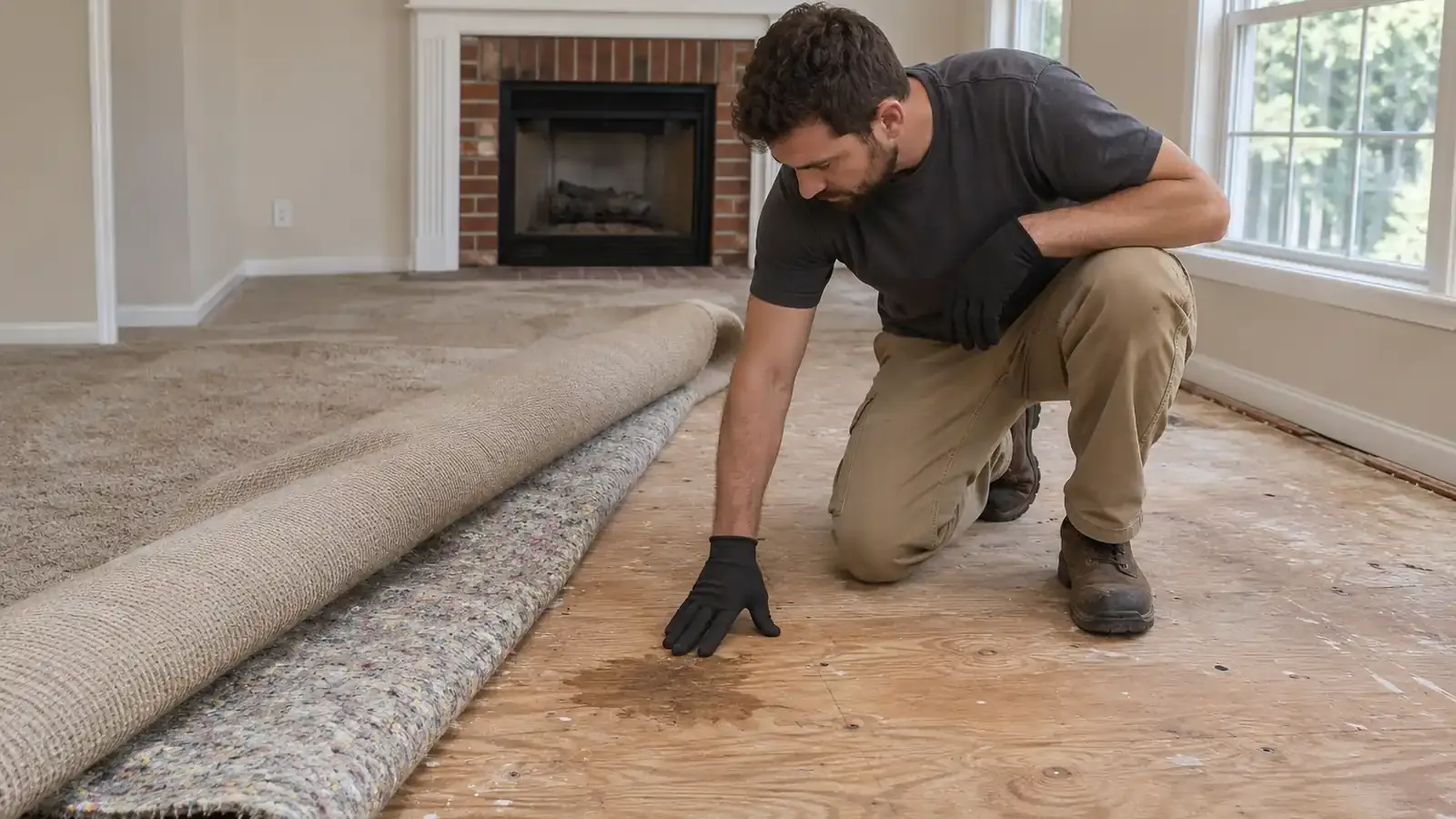
When carpet smells after a tenant moves out, replacing the visible flooring may seem like the fastest path to a clean turnover. That plan can fail if urine reached the cushion, subfloor, tack strips, baseboards, or furniture that will remain in the unit. New carpet is a finish, not an odor-control system.
The vacancy gives you a useful inspection window. Furniture can be moved, old flooring can be lifted, and hidden layers can be checked before a new tenant arrives. The goal of rental property pet odor removal is not to make the room smell acceptable for one walkthrough. It is to identify which materials hold the odor, decide what can be cleaned or must be removed, and give the installer a dry, sound, properly prepared surface.
Start With an Odor Map Before Removing Anything
Do not reduce the condition to “this room smells.” A simple map connects odor, staining, moisture, and the layout of the unit so the removal crew knows where to slow down and what to photograph.
Preserve the first impression
Walk the vacant unit before adding fragrance, opening every window, or scheduling a broad cleaning. Note where the odor is strongest, whether it is sharp or musty, and whether it changes near closets, doors, corners, HVAC returns, or former pet areas. A musty smell may point to a moisture problem rather than pet residue alone, so do not assume every odor has one cause.
Record visible staining, color loss, damaged seams, loose backing, and areas that feel different underfoot. The Carpet and Rug Institute explains that pet urine can alter carpet dyes, weaken backing layers, and sometimes pass into the cushion or subfloor.
Use screening tools as clues, not a verdict
A professional may use ultraviolet light to locate affected areas that are difficult to see. The IICRC notes that a treated area can continue to fluoresce after cleaning, so a glowing spot does not by itself prove active urine remains or that cleaning failed.
Mark suspect zones on a floor plan and photograph them with room references. Compare the map with tenant records, prior repairs, plumbing or roof leaks, and earlier carpet-cleaning invoices. This documentation helps separate a concentrated accident area from a room-wide or multi-source problem. It is an inspection record, not a substitute for applicable lease, deposit, or local legal advice.
Recheck the map as each layer comes up
The top stain may be smaller than the affected area below. During removal, compare the carpet face, backing, and cushion in every mapped zone. Photograph the underside before materials are rolled together or discarded. If dog urine soaked into carpet padding, the cushion may show a wider stain or stronger odor than the carpet pile did.
Inspect the Whole Flooring Assembly
Carpet is a layered system. Each layer can have a different condition and may need a different decision before the room is ready for installation.
| Area | What to Inspect | Why It Changes the Plan |
| Carpet face and backing | Check for staining, color changes, split seams, delamination, and odor on the underside. | Cleaning may remove soil without reversing permanent dye changes or backing damage. |
| Cushion or padding | Inspect stain boundaries, odor concentration, dampness, compression, and deterioration. | Contaminated padding can retain odor beneath carpet that otherwise looks clean. |
| Tack strips and transitions | Look for staining, corrosion, odor, looseness, and residue along edges and doorways. | Affected perimeter materials can retain odor and interfere with a secure installation. |
| Wood or concrete subfloor | Check for odor, staining, dampness, swelling, softness, residue, cracks, and previous coatings. | The substrate may require cleaning, drying, repair, removal, or compatible preparation before it is covered. |
| Baseboards and lower walls | Inspect corners, unfinished edges, gaps, and areas showing odor, swelling, or staining. | Repeated pet marking can affect vertical and concealed surfaces, not only the center of the floor. |
| Upholstery and movable contents | Check furniture skirts, cushion cores, fabric backs, and items stored against walls for odor. | A contaminated sofa, chair, or other porous item can reintroduce odor after the new carpet is installed. |
Upholstery deserves its own inspection. The IICRC’s upholstery guidance explains that urine can pass below the fabric into filling, cushions, and structural materials. Heavy contamination may require a different decision for covers and cushion cores. Our upholstery guide for pet owners offers more context for fabric-specific care.
Clear Five Gates Before New Carpet Goes Down
Do not let the flooring delivery date become the inspection deadline. Release the room for installation only after these five questions have defensible answers.
- Was the source mapped? Confirm whether the pattern is limited, repeated, room-wide, or connected to another issue such as a leak or damp slab.
- Were affected materials given separate decisions? Carpet, cushion, wood, concrete, trim, and upholstery do not have identical cleaning or replacement options.
- Is the moisture question resolved? Odor plus dampness calls for moisture investigation. EPA guidance says source control comes first and wet materials should be dried promptly; it also warns against enclosing wet materials or materials showing biological growth.
- Is the exposed substrate ready? The CRI residential installation standard requires wood substrates to be structurally sound, flat, dry, and securely anchored. Concrete moisture conditions and any planned coating, patch, adhesive, or odor-control product must also be compatible with the flooring manufacturer and installation method.
- Did the room pass a final odor check? After cleaning, removal, repairs, and drying are complete, recheck the unit under normal indoor conditions before materials and furniture hide the inspection surfaces again.
An odor-blocking coating is not an automatic answer for every stained subfloor. Applying a coating over damp, dirty, damaged, or incompletely assessed material can hide a clue without resolving the underlying condition. Choose treatment, repair, or replacement based on the substrate and follow the product and flooring manufacturers’ instructions.
Know When Cleaning Is Only Part of the Turnover
Surface cleaning may be appropriate when the carpet is otherwise serviceable, and the contamination is limited to cleanable fibers. Once the old carpet is already scheduled for replacement, however, the more important question is whether the lower layers are ready to receive the new system.
A professional assessment is especially useful when:
- Odor remains after the unit has been cleaned and aired.
- The odor becomes stronger in humid conditions or after cleaning.
- Several rooms or closets are affected.
- Staining appears on the carpet backing, cushion, or subfloor.
- The substrate is damp, swollen, soft, cracked, or previously coated.
- A musty odor or visible growth suggests a separate moisture concern.
- Furniture, drapery, or other porous contents may be contributing.
If you manage a rental and need apartment carpet cleaning in Tallahassee, contact us about carpet cleaning or pet stain and odor removal before new flooring is installed. For a deeper explanation of why lower layers matter, see our guide to pet urine in carpet padding.
Carpet replacement removes one layer; it does not certify the layers below it. A turnover is ready for new carpet when the odor source has been traced, affected materials have been addressed, moisture and substrate concerns have been resolved, and the exposed floor meets the installer’s requirements. That sequence is far less disruptive than reopening a newly carpeted unit after the smell returns.
Frequently Asked Questions
Why does the carpet smell after a tenant moves out even after cleaning?
Cleaning can improve the carpet surface while residue remains in the backing, cushion, subfloor, tack strips, or nearby porous furnishings. Fragrance and recent cleaning moisture can also change what you notice during the first walkthrough. Reinspect after the area dries and compare the odor with the mapped zones rather than assuming the entire carpet is the source.
How can I tell whether dog urine soaked into the carpet padding?
A recurring odor, a stain that returns, or a stronger smell at one location suggests that the problem may extend below the pile. The clearest opportunity comes during removal, when the carpet backing and cushion can be inspected separately. A UV scan may help map suspect areas, but it should be interpreted with odor, visible condition, moisture history, and the exposed layers.
Should every pet-odor subfloor be sealed before new carpet is installed?
No. First determine whether the material is dry, sound, cleanable, damaged, or still holding an odor source. Any coating must suit the substrate and remain compatible with the planned cushion, adhesive, and flooring system. Some conditions call for cleaning and drying; others may require repair or removal. A universal sealing rule can create installation problems or conceal unresolved moisture.
Can new padding stop odor from coming through the new carpet?
New padding does not correct residue or damage in the subfloor, perimeter materials, or lower walls. It may separate the new carpet from the old surface, but it should not be treated as an odor barrier. Resolve the source and prepare the substrate before installing the new cushion.
Is pet odor removal from upholstery separate from carpet cleaning?
Yes. Upholstery has its own fabric, filling, cushion, and frame construction. Urine may travel below the cover, and excessive moisture or the wrong chemistry can damage some textiles. Inspect furniture that will remain in the unit so it does not reintroduce odor after the flooring work is complete.
What if the odor is musty rather than clearly urine-like?
Investigate moisture. EPA guidance says damp or musty odors can signal present or past water problems, and carpet backing or padding must be dried as well as the face fibers. Check for leaks, condensation, damp slabs, wet baseboards, and visible growth before treating the issue as routine pet odor.
When should the subfloor be repaired or replaced?
That decision depends on the subfloor material and its condition. Softness, loss of strength, swelling, damaged seams, persistent dampness, or deterioration needs qualified evaluation. Staining alone does not prove structural failure, while a normal-looking surface does not prove it is dry or odor-free. Coordinate the decision with the flooring installer and, when needed, an appropriate building professional.
What should a property manager document before installation?
Keep dated photographs, the odor map, moisture or inspection findings, affected-material decisions, cleaning and repair invoices, product records, and installer requirements. Also record the carpet’s known age and prior condition when available. Documentation supports consistent turnover decisions, but deposit deductions and tenant responsibility must follow the lease and applicable law.