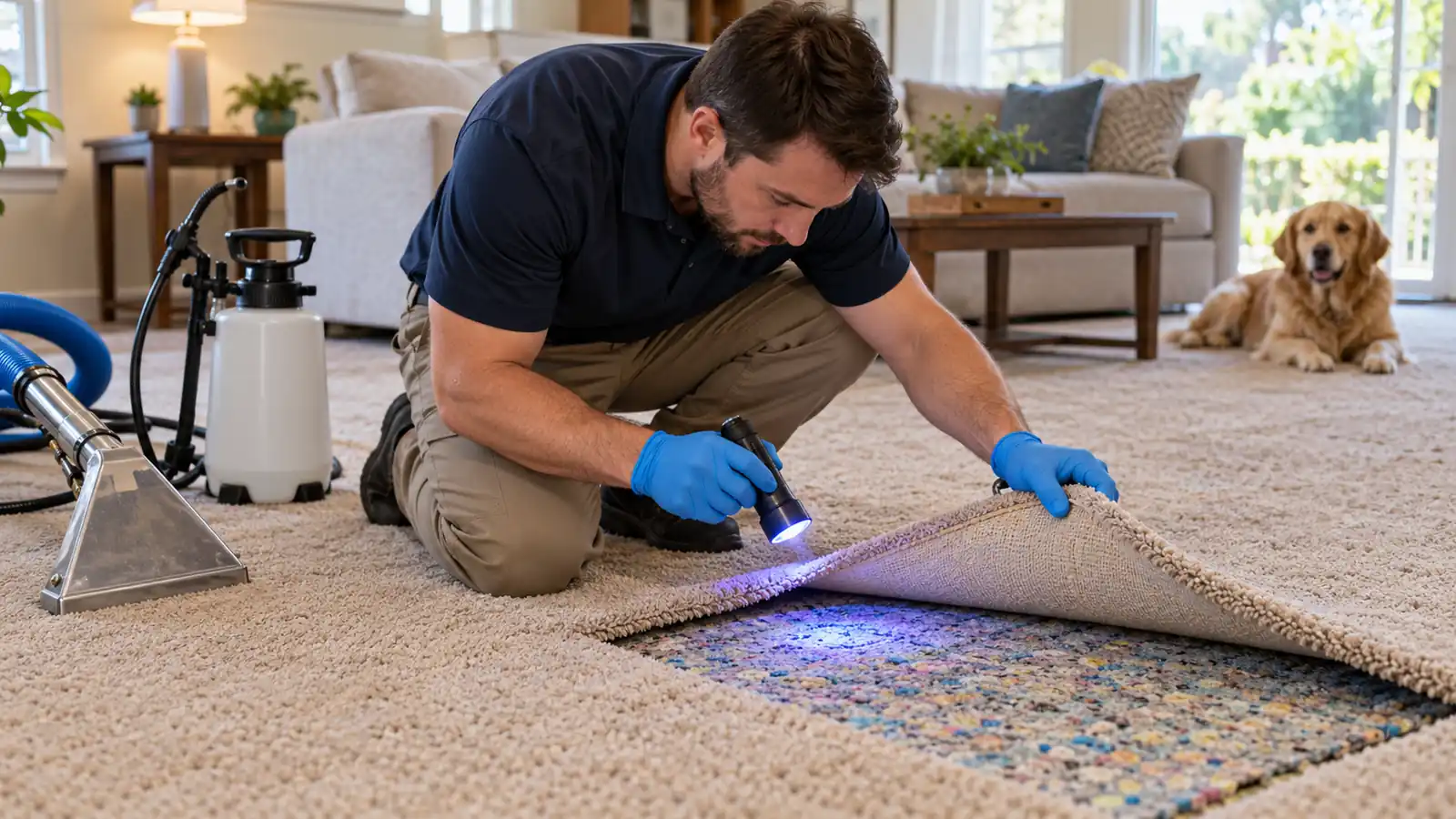
You replace stained carpet, move the furniture back, and expect the room to smell fresh. Then a humid afternoon brings back the familiar odor. The carpet is new, but the material underneath may still hold residue from old pet accidents.
In Tallahassee-area neighborhoods, humid interiors can make unresolved pet odors more noticeable. During rental turnovers or room renovations, replacing carpet may feel like the quickest reset. However, installing new flooring before addressing affected padding or subfloor materials can leave the original problem covered.
Professional pet odor removal starts with identifying where the residue remains. Carpet replacement should follow that evaluation, especially when the same smell keeps returning after cleaning.
Why New Carpet Can Cover an Old Odor Problem
Carpet replacement removes one part of a layered flooring system. It does not necessarily remove everything that has absorbed the urine.
Urine Can Travel Below the Visible Stain
Repeated accidents can carry liquid through carpet fibers, backing, and padding. Depending on the flooring construction and exposure, urine may also reach the subfloor.
The visible mark does not reliably show the depth or full spread of contamination. A small surface stain can sit above a larger affected area. Understanding pet urine contamination in carpet padding helps explain why cleaning only the visible spot may leave odor behind.
Covering the Source Makes It Harder to Reach
New carpet does not create an airtight seal. “Locking the smell in” means covering an unresolved source beneath fresh flooring.
If odor remains below the replacement carpet, correcting it may require lifting the new installation. That creates additional disruption, especially after furniture returns or a new tenant moves in.
Pause Before Scheduling Carpet Replacement
A persistent smell deserves a clear explanation before you commit to new materials.
Warning signs worth discussing include:
- Odor returning after the carpet dries.
- Repeated accidents in the same corner.
- Smell remaining after carpet or padding removal.
- Staining around floor edges or nearby trim.
- Dampness, swelling, or deterioration beneath the carpet.
These clues justify further evaluation. They do not prove that every affected floor needs replacement.
At Extreme Carpet Care & Restoration, we offer pet stain and odor removal. Before your installation date, contact our team to discuss recurring smells, previous cleaning attempts, and known dampness. Keep pets away from exposed flooring and cleaning products.
Call 850-422-2227 for a free quote and discuss your cleaning needs before covering the affected area.
Can Professional Cleaning Remove Pet Odor?
Professional cleaning can help when treatment reaches the affected material and that material remains suitable for cleaning.
When Cleaning May Be Practical
A limited accident on otherwise sound carpet presents a different decision from repeated soaking. Cleaning may be reasonable when the affected area is accessible and the carpet retains usable backing and fibers.
Product selection matters. An appropriate urine treatment must suit the material and contact the residue. Follow product directions and carpet care instructions rather than assuming that a stronger mixture will work better.
When Replacement Deserves Consideration
Deeply affected padding, damaged backing, or persistent contamination can limit what cleaning achieves. Permanent discoloration may also remain after odor improves.
Consider carpet condition alongside odor severity when deciding when carpet needs replacement. Ask for separate explanations of what cleaning may improve and what damaged materials cannot recover.
Replacement decisions should follow the condition of each affected layer. A strong smell alone does not establish how much flooring must come out.
Plan Subfloor Treatment Before New Flooring
If urine reaches the subfloor, the next decision concerns the material beneath the carpet, not another surface deodorizer.
Clean and Evaluate the Exposed Material
A qualified professional should evaluate affected wood or concrete before recommending treatment. The material’s condition, contamination depth, and moisture history influence the options.
Where appropriate, cleaning may form part of preparation. Damaged sections may require evaluation by a qualified flooring or repair professional. Do not assume that ordinary carpet cleaning includes subfloor repairs.
Consider Sealing Only Within a Suitable Plan
An odor-blocking coating may be appropriate in some circumstances after cleaning and preparation. It should not become a shortcut over unresolved dampness or deteriorated material.
Confirm compatibility with the subfloor and planned flooring system. Before installation, clarify who will handle preparation, any repairs, drying requirements, and the flooring work. The practical sequence is straightforward: expose affected layers as needed, address contamination, resolve moisture concerns, and then install replacement materials.
Account for Humidity and Hidden Water Damage
Humid weather can make old urine odors noticeable again, but not every returning smell comes from pets.
A roof leak, plumbing failure, or damp carpet edge can create a separate moisture problem. Your post-summer odor and moisture check should include nearby baseboards, furniture, and flooring transitions.
If you discover water intrusion, residential water damage restoration may be relevant before floor replacement. Odor treatment does not substitute for addressing wet materials. Keep away from wet electrical hazards. If sewage or floodwater affected the room, seek qualified cleanup guidance instead of treating it as an ordinary pet accident.
Prepare Your Property for a Useful Evaluation
Clear information helps you compare cleaning and replacement recommendations without repeatedly paying for work that misses the source.
Before your appointment:
- Mark recurring odor locations on a simple room sketch.
- Photograph visible stains and damaged finishes.
- List cleaning products already applied.
- Note whether odors change after rain or cleaning.
- Identify previous leaks and repeated accident areas.
- Explain installation deadlines or tenant access needs.
For a fresh accident, blot promptly and follow appropriate care instructions. Avoid repeatedly soaking an old spot. These pet stain removal considerations help distinguish immediate cleanup from a deeper recurring problem.
If you rent, report the issue and obtain authorization before lifting carpet or altering flooring. For commercial properties, plan access around occupied rooms and customer routes.
Keep photographs and written recommendations together. A clear record helps you coordinate cleaning, material removal, and installation without losing track of unresolved concerns.
Choose Help That Matches the Odor’s Depth
Whether you need pet stain removal in Tallahassee, FL, or cat urine odor removal in Tallahassee, the useful question is the same: which materials need attention?
Compare recommendations by scope, expected limitations, and the responsibilities assigned to each trade. Ask whether the proposal addresses carpet alone, affected padding, or further evaluation beneath the floor covering.
A useful estimate should also distinguish odor treatment from stain correction. This helps you decide whether retaining the carpet still meets your practical and appearance goals.
At Extreme Carpet Care & Restoration, we offer carpet cleaning, upholstery cleaning, and pet stain and odor removal. For pet odor removal in Tallahassee, call our team at 850-422-2227 for a free quote.
Describe the accident history, recurring odor, and replacement plans. If flooring is damp or damaged, raise those concerns before authorizing installation so cleaning and any separate repair work can follow the right order.
Frequently Asked Questions
Can professional cleaning remove pet odor completely?
It can resolve some odor problems, but results depend on contamination depth and material condition. Residue in inaccessible padding or subfloor materials can limit carpet-only treatment.
Ask what the proposed cleaning can reasonably address before approving the work.
Why does the room still smell after carpet replacement?
The old carpet may not have been the only affected material. Urine residue can remain in padding, underlying flooring, or nearby surfaces. Have the remaining source evaluated before adding fragrance or ordering another replacement.
Does pet urine always reach the subfloor?
No. The amount of liquid, repeated exposure, and flooring construction affect how far it travels.
A visible stain alone cannot establish the depth of contamination. Recurring odor warrants investigation, but it does not automatically mean the subfloor is ruined.
Must all carpet padding be replaced?
Not necessarily. The decision depends on the extent of contamination and whether cleaning is practical.
-Localized damage may call for a different scope than widespread repeated accidents.
-Ask why the recommended removal area matches the conditions found.
Can subfloor sealers replace cleaning?
A coating should not automatically substitute for cleaning and appropriate preparation. The surface condition and compatibility with new flooring also matter. Have a qualified professional explain whether sealing fits the situation and what must happen first.
Why does cat urine odor return during humid weather?
High humidity can make residual urine odor noticeable again, even without a new accident. A temporary improvement does not establish that all affected material was addressed. Describe this seasonal pattern when arranging an evaluation, especially if the odor repeatedly returns after cleaning.
What if the stain remains after the odor improves?
Urine can permanently alter carpet dyes or damage fibers. Odor reduction and stain correction are separate outcomes, so one may improve more than the other. Consider appearance, condition, and your replacement plans together before repeating treatment.
Should you keep applying enzyme cleaner to an old spot?
-Avoid repeated applications without checking product instructions and material compatibility.
-Treatment must reach the residue, but adding more liquid does not guarantee better results.
-If the area remains damp or odor repeatedly returns, seek professional guidance.
What if the carpet also became wet during a storm?
Disclose that history before arranging pet odor treatment or replacement. Water intrusion can create separate drying and contamination concerns beneath the carpet. Floodwater or sewage exposure requires qualified cleanup guidance rather than routine spot cleaning.
How should you manage pet odor during a rental turnover?
-Document affected rooms, prior cleaning, visible damage, and any known leaks.
-Resolve cleaning and flooring decisions before committing to an installation or move-in date.
-Confirm responsibility for each task so an untreated layer does not disappear beneath the new carpet.