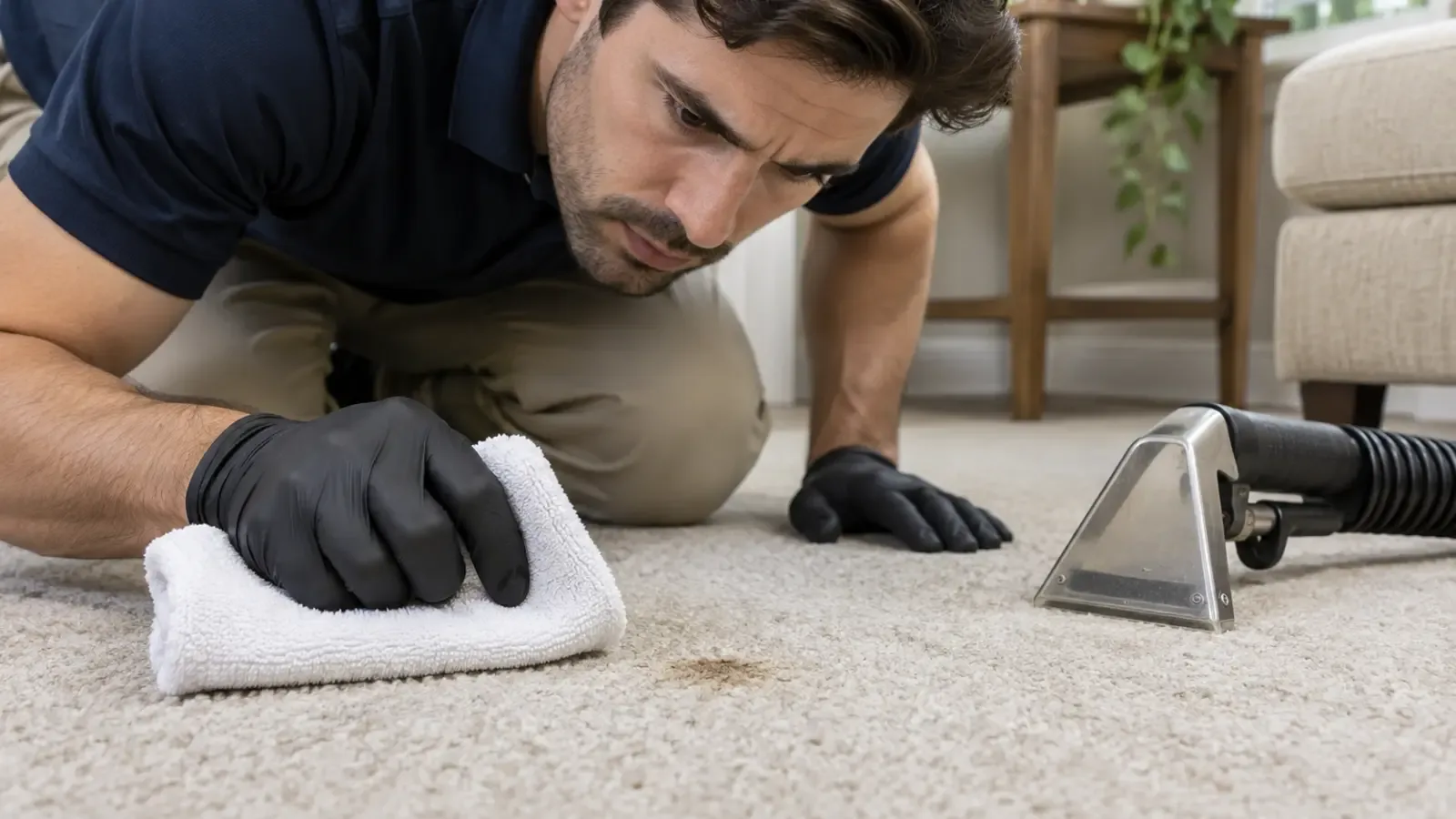
Seeing old stains coming back through carpet after cleaning does not necessarily mean nothing was removed. The visible part of the spill may have been cleaned while dissolved material remained near the base of the fibers, in the backing, or possibly in the cushion below.
As the carpet dries, moisture moves toward the surface. It can carry that remaining material with it and leave it at the fiber tips when the water evaporates. This process is called wicking, or wick-back.
The useful clue is not only where the mark appears, but when it appears. A stain that returns during drying behaves differently from a clean area that gradually darkens after people begin walking on it again.
What Actually Moves During Carpet Wicking
Wicking moves dissolved material through damp carpet fibers. The original stain does not rise as one solid patch.
According to the IICRC’s carpet-care guidance, water-soluble soil left near the yarn base or backing can migrate upward or outward while the carpet dries. When the moisture evaporates at the surface, the carried material remains behind and becomes visible again.
Several carpet layers may be involved:
- Face yarn: The visible carpet fibers may look clean immediately after treatment.
- Backing: A larger spill can pass below the visible pile and dry in the carpet backing.
- Cushion: If liquid reached the pad, later cleaning moisture may re-wet some of that residue.
- Floor beneath the carpet: Repeated or large-volume spills may extend farther, although a surface mark alone cannot confirm this.
A stain can therefore disappear from the face yarn without disappearing from the carpet system.
Use Three Timing Patterns to Identify What Came Back
A returning mark is a timing problem as much as a stain problem. Watch the area through a complete drying cycle before deciding what treatment it needs.
The mark appears while the carpet is drying
A spot that fades during cleaning and returns before the carpet is completely dry is consistent with wicking. It often appears in the same general location and color family as the earlier stain.
The outline may become softer or slightly wider if the liquid footprint below the surface extends beyond the original visible mark. This is a clue, not proof of how deeply the spill traveled.
The area darkens after foot traffic resumes
If the carpet looks clean and fully dry but becomes gray or dirty again over the following days or weeks, the problem may be rapid resoiling.
Cleaning solution, soap, or sugary spill residue can remain sticky enough to attract new soil. The Carpet and Rug Institute’s care guide identifies inadequate removal of spot-cleaning solutions and sticky spill residue as common reasons for soiling after treatment.
Adding more detergent can strengthen this cycle rather than correct it.
The mark never truly disappears
Some apparent stains are changes in the carpet itself. Bleaching, dye loss, pile distortion, wear, or browning in certain carpet materials may remain visible regardless of whether the area is wet or dry.
Cleaning removes soil. It cannot restore color that has been chemically altered or replace damaged fibers. A mark that is lighter than the surrounding carpet deserves particular caution before another product is applied.
Why Repeated Cleaning Can Make a Returning Stain Worse
The safest way to remove tough carpet stains is not to keep adding stronger products. Repeated wet treatment can introduce more moisture, spread dissolved material, or leave additional residue.
Wick-back becomes more likely when:
- The original spill involved a substantial amount of liquid.
- The stain was treated several times with different products.
- More moisture was applied than the equipment or towels could recover.
- Cleaning solution remained in the fibers.
- The backing or cushion dried much more slowly than the carpet surface.
- The original spill source was never identified.
Do not turn one recurring spot into a chemistry experiment. Mixing products can damage carpet dyes and fibers, create difficult residues, or produce hazardous fumes. Always follow the carpet manufacturer’s instructions and the cleaning product label.
What to Do When the Mark Returns
Use the drying pattern as evidence before adding more cleaner. A few observations can prevent unnecessary soaking and help identify the appropriate follow-up.
- Let the area dry completely. A surface that feels dry may not confirm that the backing or cushion is dry.
- Take photographs. Capture the spot when it first returns and again after the area has fully dried.
- Record the timing. Note whether the mark returned within the drying period or only after the room went back into use.
- List previous treatments. Include spot removers, detergents, rental-machine products, pet treatments, and homemade mixtures.
- Avoid scrubbing. Friction can distort the pile and make the area look different even after the soil is removed.
- Check the manufacturer’s care guidance. Fiber type, dye stability, warranty terms, and approved products can change the correct method.
- Contact the previous cleaner before treating the spot. They need to know how the area behaved after drying and what has been applied since the service.
For a limited manufacturer-approved spot treatment, use small amounts of solution, apply it through a clean white cloth when directed, blot rather than rub, and remove as much moisture as possible. Stop if the carpet transfers color, changes texture, or remains unusually wet.
When Deep Carpet Stain Removal Requires a Closer Inspection
Deep carpet stain removal is not one universal procedure. The correct approach depends on the spill, carpet construction, prior products, and whether residue remains only in the pile or has reached lower layers.
A closer inspection is appropriate when:
- The same stain returns after multiple complete drying cycles.
- The area remains damp longer than the surrounding carpet.
- A musty or persistent odor accompanies the mark.
- The original spill involved a large amount of liquid.
- Pet accidents repeatedly occurred in the same location.
- The carpet shows color loss, browning, or fiber damage.
- The source involved floodwater, sewage, or another contamination concern.
Padding does not automatically require replacement because a stain returned. However, recurring odor or evidence of deep saturation may justify evaluating the carpet, cushion, and floor separately.
Pet urine also requires stain and odor decisions that ordinary beverage spills do not. Our guide to why old pet stains resurface during humid weather explains that narrower situation.
What to Tell Us About a Returning Stain
The stain’s history can be as useful as its current appearance. Before arranging an assessment, gather:
- What caused the original mark, if known
- Approximately when the spill occurred
- Every product or machine used on it
- Whether it disappeared while wet
- How long it took to return
- Whether it returned before or after foot traffic resumed
- Any odor, dampness, color loss, or texture change
If you need carpet stain removal in Tallahassee, we can use those details to evaluate whether the likely issue is wick-back, cleaning residue, a stain-specific treatment need, or permanent carpet change. We will not assume that repeatedly soaking the visible spot is the right answer.
The Return Pattern Is the Clue
A stain that returns during drying points toward moisture carrying remaining material to the surface. A patch that darkens after use points more strongly toward residue attracting new soil. A mark that never changes may be discoloration or fiber damage rather than removable soil.
That distinction matters. The next step should address the behavior of the mark, not simply repeat the treatment that made it disappear temporarily.
Frequently Asked Questions
Is carpet wicking permanent?
Not necessarily. Some wicked material can be removed with a targeted follow-up and controlled drying. Success depends on the original spill, the depth reached, the carpet construction, previous treatments, and whether the affected material remains accessible. Permanent dye or fiber damage will not respond like removable soil.
How long should I wait before deciding that a stain returned?
Wait until the carpet has completed its expected drying period. Drying time varies with the amount of moisture used, carpet construction, airflow, indoor humidity, and the condition of the cushion. Contact the cleaner if the carpet remains unusually wet or the mark reappears during drying.
Does a returning stain mean the carpet padding must be replaced?
No. A returning surface stain does not prove that the cushion needs replacement. Padding evaluation becomes more relevant after a large spill, repeated pet accidents, persistent odor, prolonged dampness, or contaminated-water exposure.
Why did the returned stain look larger than the original mark?
Liquid can spread outward after reaching the carpet backing or cushion. Cleaning moisture may then dissolve material across that broader footprint and carry some of it toward the surface. The visible outline does not precisely map the affected layers below.
Can I keep rinsing the stain with plain water?
Small amounts of water may be part of manufacturer-approved residue removal, but repeated soaking can worsen wick-back or extend drying. Follow the carpet manufacturer’s instructions, use minimal moisture, and stop if the area remains wet or continues to spread.
Can professional cleaning make an old stain reappear?
Cleaning moisture can reveal residue that was already below the surface. That does not automatically establish that the cleaning was performed incorrectly. The original spill depth, extraction, drying conditions, and prior products all affect whether wick-back occurs.
How can I tell a returning stain from color loss?
A stain usually adds visible material or soil, while color loss removes or changes the carpet dye. A lighter patch that remains unchanged through cleaning and drying may be color damage. Because lighting and pile direction can also change appearance, an in-person assessment may be needed.