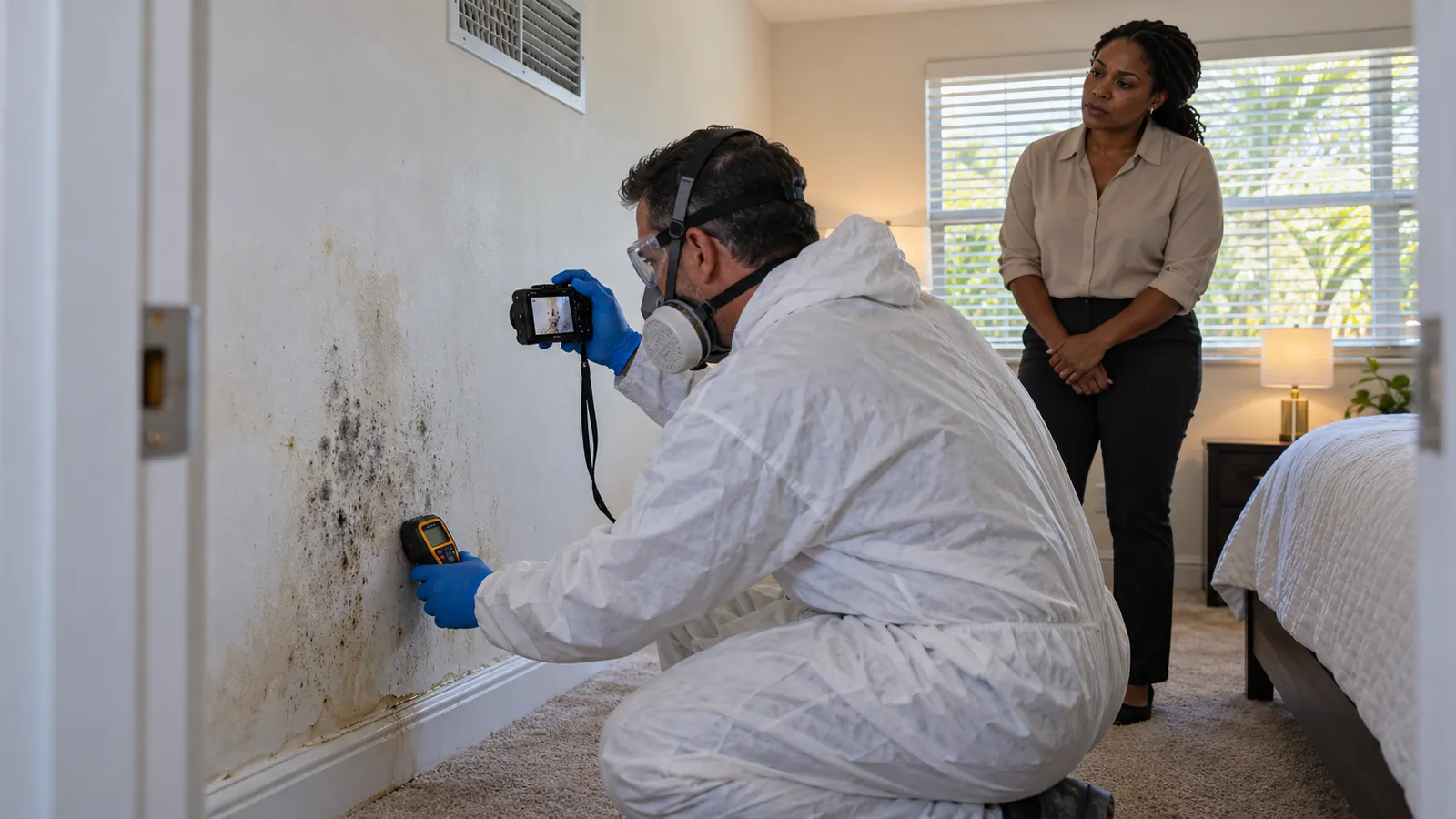
A stain beneath your rental’s window dries after a summer storm, but the closet still smells musty. In Tallahassee-area neighborhoods, humid interiors and rain intrusion can overlap. The visible mark may not explain the full moisture problem.
Before anyone scrubs, paints, or removes materials, document what changed, where, and when. Whether you rent, own, or manage the property, your records should support cleanup decisions without delaying urgent action.
Put Safety Ahead of Photographs
Useful evidence never requires you to enter a hazardous area.
- Stay out of standing water when electrical hazards may be present.
- Avoid unstable ceilings and areas affected by sewage.
- Immediate danger takes priority over paperwork; contact the appropriate emergency service or utility when needed.
- Photograph only from accessible, safe positions.
- Do not peel wallpaper, open walls, or pull up flooring to expose suspected mold.
- Disturbing hidden growth can spread contamination.
- Record any emergency action already taken, including who performed it and when.
Build a Room-by-Room Baseline
A clear starting record separates observable changes from assumptions about their cause.
Photograph Locations and Materials
- Take wide room views, followed by closer images.
- Capture nearby windows, plumbing fixtures, floor edges, and air vents without disturbing materials.
For each affected location, record:
- The room, wall, or cabinet involved.
- The discovery date, photograph date, and approximate affected area.
- Visible spotting, swollen trim, peeling paint, and any musty odor.
- Keep original image files and label copies rather than editing the originals.
- Use consistent room names so later photographs can be compared with the same locations.
Recognizing early warning signs of mold helps identify areas needing attention, but photographs cannot establish hidden extent or identify mold species.
Inventory Belongings Separately
- List affected furniture, rugs, clothing, stored boxes, and other belongings separately from building materials.
- Include ownership, condition, photographs, and available purchase records.
- Document items before disposal when practical, but do not retain contaminated belongings indoors solely as evidence.
- Record removal decisions and avoid carrying suspect materials through unaffected rooms yourself.
- Keep cleanup expenses and replacement estimates separate; a receipt records spending but does not establish who must reimburse it.
Log Moisture and Communication
Connect each observation to a dated report and a clear next step.
Describe the Water History
- Record recent roof leaks, plumbing failures, air-conditioning problems, stormwater entry, and previous repairs.
- Include when the area became wet and whether the source remains active.
- If you already have humidity readings, save the location, time, and operating conditions.
- A room-air reading does not measure mold or prove that materials inside walls are dry.
- Separate observations from conclusions. “Ceiling stain appeared after rain” is useful. “The roof definitely caused all the mold” requires evidence.
Residential water damage restoration may include water extraction and drying after a leak. Record that work alongside mold concerns rather than treating surface cleaning as the whole repair.
Save Notices and Responses
- If you rent, report the problem promptly in writing and retain delivery records.
- If you own or manage the rental, acknowledge the report and preserve inspection appointments, access arrangements, and work orders.
- After a telephone discussion, send a written recap of the agreed next step.
- Identify who will arrange access, evaluate the leak, and provide an update.
- Keep the lease, move-in photographs, earlier maintenance requests, and follow-up messages together.
- A maintenance email may not satisfy every formal legal notice requirement.
Review Florida tenant and landlord rights and seek legal advice before withholding rent, deducting repair expenses, or ending a lease. Mold alone does not establish fault or payment responsibility.
When to Call a Mold Remediation Company
The extent, location, and water source matter more than stain color.
Professional evaluation becomes especially important when growth returns, odors persist without a visible source, several areas are affected, or sewage complicates the loss. Suspected mold inside walls or air-handling equipment also deserves careful investigation.
For a mold inspection in Tallahassee, ask what the evaluation covers and whether you will receive written findings. Inspection and laboratory sampling are different tasks. Visible growth usually makes sampling unnecessary to establish that mold cleanup is needed.
For mold remediation in Tallahassee, FL, call 850-422-2227 to discuss mold removal and remediation. Keep your room photos, leak history, and property contact details ready. Avoid disturbing affected materials while you arrange help.
Define the Cleanup Scope Before Removal
A written scope separates moisture correction, material decisions, and later repairs.
Understanding mold removal versus remediation helps keep attention on both visible growth and the conditions supporting it.
Ask for a plan that identifies:
- Which rooms and materials require evaluation, cleaning, or removal.
- Who will correct the moisture source and coordinate access.
- What findings could change the scope and how changes will be documented.
Porous materials, including moldy carpet and ceiling tiles, may require disposal. A washable surface and a saturated layered assembly need different decisions. Request an explanation before assuming every item can be cleaned or every stained material must be replaced. Before planned removal, record who authorized it and which belongings need separate decisions.
Do not paint or caulk over mold. Cleanup and drying must precede finishing work. Keep photographs and a written item list when materials leave the property.
Add Shared-Space Details for Commercial Rentals
A single-room report may miss moisture pathways across a larger property.
For commercial mold remediation in Tallahassee, include suite numbers, common corridors, storage areas, neighboring complaints, and relevant building-system problems. Record affected operations and agreed access restrictions without declaring the entire building unaffected from one room’s appearance.
Identify who can authorize work and who will update occupants. Keep proposed work separate from approved work, and preserve written changes. Commercial lease responsibilities need their own review rather than assumptions drawn from residential rental rules.
Plan Your Completion Records Before Work Starts
Decide early what information will document completed work and unresolved concerns.
Compare Results With the Starting Record
- Use a post-restoration inspection checklist to organize repair records, updated photographs, removed-material lists, and available moisture readings.
- Ask which areas were evaluated and which were inaccessible.
- Document any remaining leak, odor, or unfinished work.
Fresh paint and a dry-looking surface alone do not establish that hidden moisture has been addressed.
Track Recurring Moisture
Build a mold prevention routine around prompt leak reporting, functioning exhaust ventilation, and attention to condensation. Report air-conditioning drainage problems rather than assuming indoor humidity is unavoidable.
After subsequent rain, compare the same locations with your original photographs. Add returning odors, stains, or dampness to the existing record. Your goal is a clear account of what happened, what changed, and what still needs attention.
Frequently Asked Questions
What should you document first when mold appears in your rental?
- Start with the date, room, visible condition, and any nearby leak or water stain.
- Take an overall photograph and closer images without touching or disturbing affected materials.
- Save your first written maintenance report and the response, then add later observations to the same record.
Do you need a mold test before reporting the problem?
No. You can report visible growth, persistent musty odors, or moisture problems without laboratory results. Visible mold usually makes routine sampling unnecessary simply to establish that cleanup is needed. Ask what a proposed inspection or test will answer, and do not delay urgent moisture control while waiting for sampling.
Who is responsible for mold in a Florida rental?
- Responsibility depends on the moisture source, applicable legal duties, property type, and rental agreement.
- Keep repair history, move-in records, notices, and findings that help explain how the condition developed.
- Do not assume either ownership or occupancy alone establishes fault; obtain legal guidance when repair or payment responsibilities are disputed.
Can you withhold rent until mold cleanup is completed?
Do not stop paying rent solely because mold appears or a maintenance request remains unanswered. Florida rent remedies involve specific legal conditions and notice requirements, and improper withholding can expose you to eviction proceedings.
Have a Florida attorney or legal aid service review your circumstances before changing rent payments or terminating the lease.
Should cleanup wait until every damaged item is photographed?
-No. Document accessible conditions promptly, but do not postpone emergency response or necessary moisture control to complete an inventory.
-Record urgent work as it proceeds, including the date, affected area, and actions taken.
-When an item must leave immediately, use photographs and written descriptions where practical rather than keeping contaminated materials indoors as evidence.
What should you record after stormwater entry or a sewer backup?
-Note when water entered, where it traveled, and whether it came through the roof, across a doorway, or from a drain.
-Treat the source as unconfirmed when you cannot establish it; clear-looking water does not prove an absence of contamination.
-Avoid contact with floodwater or sewage and arrange appropriate professional evaluation before attempting cleanup.
Can moldy carpet, drywall, or furniture be saved?
The answer depends on the material, moisture exposure, contamination, and whether cleaning can address the affected areas. Porous materials such as carpet, insulation, or drywall may need removal when mold cannot be adequately cleaned away.
Photograph the item, document the recommended decision, and request specialist advice for valuable furnishings rather than assuming cleaning will restore them.
What should you do when mold appears near an air-conditioning vent?
-Photograph the location and note condensation, recurring spotting, odors, and any recent air-conditioning drainage problem.
-A mark near a vent does not establish the condition of the entire system, so avoid opening equipment or disturbing suspect growth.
-If contamination inside the system is known or suspected, do not operate it until an appropriate professional has evaluated the concern.
What extra records matter in a shared commercial building?
-Include suite numbers, affected common areas, adjacent complaints, access arrangements, and relevant building-system maintenance records.
-Identify who can authorize work and who will communicate changes to occupants, staff, or tenants.
-Keep proposed work, approved scope, and later revisions distinct so a report from one space does not become an unsupported conclusion about the entire building.
What should you keep after remediation finishes?
-Retain before-and-after photographs, repair records, material-removal lists, available moisture readings, and the final written scope.
-Document inaccessible areas and anything that remains unresolved, including leaks, odors, or unfinished repairs.
-Add later dampness or recurring stains to the same file, especially after another rain event, rather than relying on fresh paint as evidence of completion.