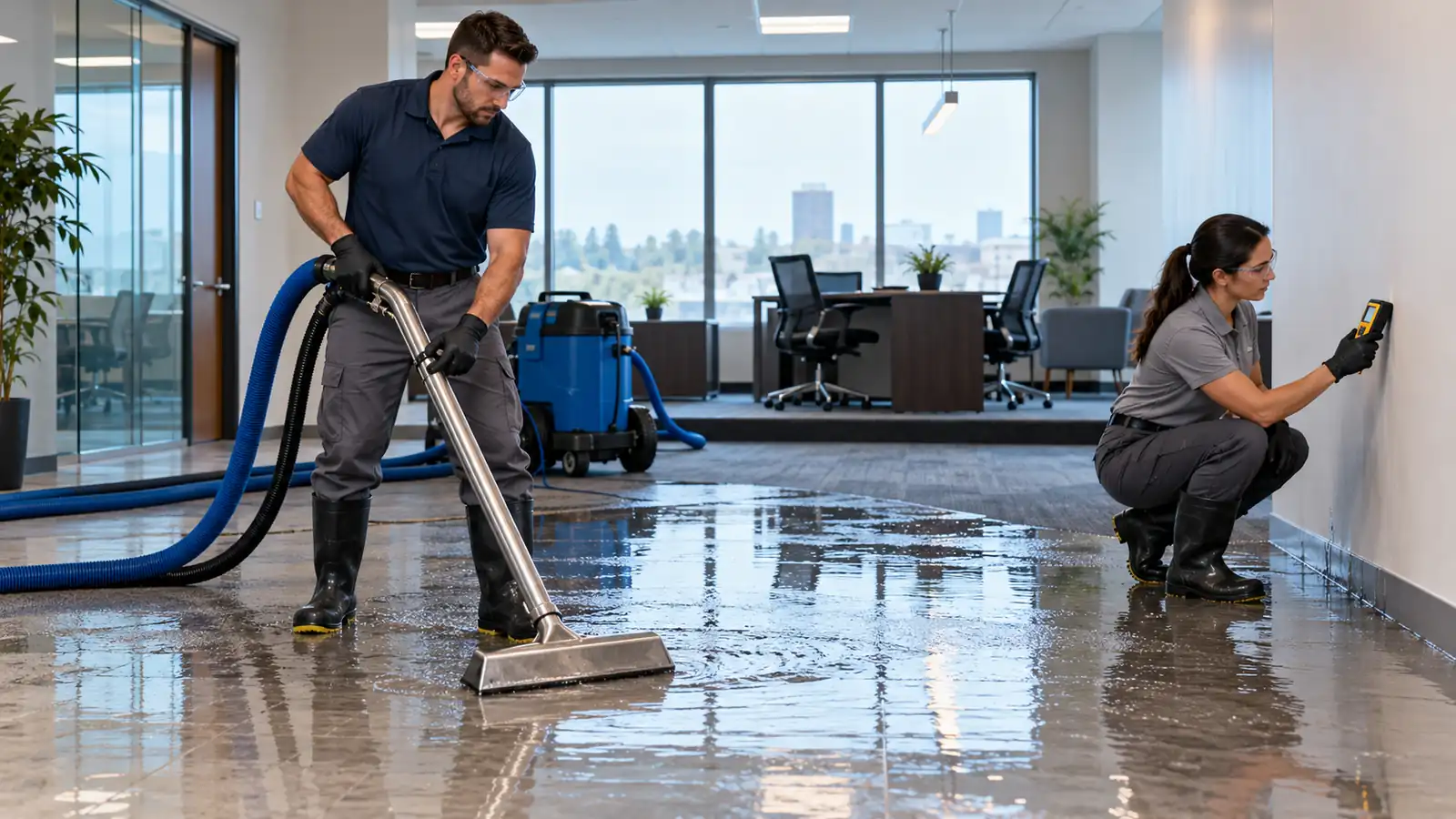
The parking lot has drained, and employees are asking whether tomorrow’s shift will run. Your lobby looks better, but that does not answer whether the building is ready. Summer downpours and tropical storms can leave commercial interiors with moisture that outlasts the visible flooding.
For commercial water damage in Tallahassee, reopening requires more than removing puddles. You need to understand the water source, affected materials, building systems, and access conditions. Treat the return of employees, tenants, and customers as a separate decision from starting cleanup.
Flooded Commercial Building: What to Do First
Your first priority is controlling access and avoiding hazards, not rescuing inventory.
Restrict Entry and Check Utilities
- Keep people outside affected areas until qualified professionals assess the relevant hazards.
- Do not walk through standing water to reach electrical panels, equipment, or belongings.
- Watch for flood cleanup hazards, including damaged electrical systems and unstable building materials.
- Have an electrician evaluate water-affected electrical equipment before restoring power.
- Leave immediately if you suspect a gas leak, and contact emergency services or the utility from a safe location.
Control the Source and Record Conditions
- Stop an active plumbing leak only when you can reach the shutoff safely.
- Leave damaged roofs, fallen wires, and unstable ceilings to appropriate specialists.
- From an accessible, safe position, record where water entered and which rooms or suites it reached.
- Record when you discovered the damage and what changed afterward.
- Photographs of affected finishes, equipment, and inventory.
- Never delay evacuation or urgent hazard control to take pictures.
- Keep the property manager, occupants, and repair trades working from the same room-by-room record.
- Distinguish permission to enter for assessment from permission to resume normal use.
- An authorized cleanup visit does not automatically mean employees can return to desks or customers can enter the premises.
Let the Water Source Shape the Cleanup
The source and path of the water help determine what cleaning and material removal may be necessary. A broken supply line differs from storm runoff or a sewer backup. Water that looks clear can still carry contamination. Do not classify a loss by appearance alone.
Different types of water damage require different cleanup decisions. Outdoor floodwater, sewage, and unknown water sources need a cautious assessment. Do not assign routine janitorial staff to contaminated cleanup without appropriate training and protection. Keep unaffected belongings away from wet materials.
A roof leak also needs evaluation of the route water took through insulation or other materials. Do not assume every indoor leak stays clean. Note stored chemicals, wastewater, or other substances the water may have contacted. Leave unusual contamination concerns to appropriately trained specialists.
Separate Water Removal From Drying
Planning commercial water damage restoration in Tallahassee means distinguishing visible water removal from moisture remaining inside materials.
Check Beneath Surfaces
Water can remain beneath flooring, behind baseboards, inside wall cavities, and under cabinets. A surface that feels dry does not establish that the assembly underneath has dried.
The water damage restoration process includes assessment, water removal, drying, and cleaning. Ask which concealed areas need evaluation and how drying progress will be checked. Do not reinstall finishes over materials that still need drying.
Decide What Can Stay
Assess carpet, padding, insulation, drywall, and furniture separately. Material type, contamination, damage, and the ability to clean and dry the item affect salvage decisions.
Flood-contaminated porous materials may require removal rather than surface cleaning. Salvageable flooring still needs attention underneath. Replacing carpet over a damp subfloor leaves the moisture problem unresolved.
For help planning commercial flood cleanup in Tallahassee, call 850-422-2227 to discuss flood and storm damage restoration, water removal, drying, and affected materials. Keep employees, tenants, and customers outside restricted areas while appropriate professionals address immediate hazards.
Check Shared Systems Before Returning
A dry-looking room can still depend on building systems or access routes affected elsewhere.
Assess HVAC Before Restarting
Do not restart heating or air conditioning when you know or suspect mold contamination within the system. Water-affected equipment, wet duct insulation, and moisture near air intakes need professional evaluation.
A moisture and mold assessment should consider hidden spaces and potentially affected HVAC components. Do not use fans before determining whether the water is clean or sanitary. Air movement is not a substitute for contamination assessment.
Review Access and Essential Services
- Check the routes people actually use, including entrances, corridors, stairs, and exits.
- Keep drying equipment, cables, debris, and damaged flooring out of occupied travel paths.
- Confirm that lighting, restrooms, and other essential facilities function appropriately.
- Ask relevant local officials whether the damage requires inspections before reopening.
- A restoration visit does not replace an electrical evaluation, structural assessment, or any required official review.
Make the Reopening Decision Room by Room
Base each return decision on completed work and remaining risks rather than a preferred opening date.
Keep a Written Handoff
- Request a clear summary of the affected areas, cleanup completed, drying findings, materials removed, and unresolved repairs. Identify who will address each remaining issue.
- Separate immediate occupancy barriers from cosmetic work that can wait.
- A stained wall and an unresolved electrical concern do not carry the same implications.
- Record both, but do not let a cosmetic repair list obscure an outstanding hazard.
Before allowing routine occupancy, review:
- Whether the water source and moisture problem have been corrected.
- Whether affected materials have been cleaned, dried, or removed as appropriate.
- Whether relevant systems and travel routes are ready for use.
- Whether remaining work can stay separate from occupied areas.
Recheck signs of remaining flood damage, such as warped finishes, standing water, or persistent musty odors. Odor alone cannot confirm readiness, and its absence cannot prove that concealed materials are dry.
Set Clear Return Instructions
- Tell employees and tenants which spaces remain closed, where they may enter, and whom to contact about new concerns.
- Update customers and delivery contacts before reopening, not after they arrive at a restricted entrance.
- Partial reopening needs more than a closed office door. Shared ventilation, restrooms, and exit routes may connect apparently unaffected rooms with damaged areas. Confirm those connections before approving a limited return.
Reduce Repeat Losses After Reopening
- Use the recovery period to address the entry point and improve your next response.
- Review roof drainage, gutters, door openings, plumbing connections, and low storage areas as relevant to the loss.
- Include rainy-season commercial maintenance in your property schedule rather than waiting for another storm.
- Keep emergency contacts, shutoff information, and tenant communication details accessible.
- After reopening, investigate renewed dampness, staining, or musty odors promptly.
The goal is not simply to restore the appearance of the space. It is to correct the moisture problem and make return decisions that reflect the building’s actual condition.
Frequently Asked Questions
Can you reopen as soon as standing water is gone?
No. Removing visible water does not confirm that walls, flooring, or electrical systems are ready for use.
- Check concealed moisture, contamination, and affected building systems before allowing routine occupancy.
- Use completed assessments and cleanup findings, not the appearance of the lobby, to guide your decision.
Can employees help remove floodwater?
- Do not assign ordinary staff to sewage or unknown floodwater cleanup without appropriate training and protection.
- Keep employees away from wet electrical equipment and unstable materials.
- You can coordinate communications and document conditions from a safe location without entering the damaged area.
What changes after storm surge in coastal Wakulla County?
Treat storm surge as potentially contaminated water rather than a clean plumbing leak. Affected porous materials and electrical equipment need careful evaluation before reuse. Surface washing alone does not resolve contamination inside absorbent materials or moisture beneath flooring.
How should you handle a sewer backup in a shared building?
- Keep occupants away from affected restrooms, corridors, and tenant spaces.
- Arrange appropriate plumbing assessment and contaminated-water cleanup rather than relying on mopping or fragrance.
- Evaluate soaked materials and shared access routes before allowing occupants to resume using those areas.
Can you save commercial carpeting after flooding?
The answer depends on the water source, contamination, material condition, and drying feasibility. Some clean-water losses allow restoration, while contaminated or extensively damaged carpet may need removal. Any salvage decision must also account for padding and the flooring underneath.
Can you restart air conditioning to speed drying?
Do not run HVAC when you know or suspect mold contamination in the system. Have water-affected components evaluated before restarting them, including electrical components when relevant. A cooler room does not prove that concealed materials have dried or that contamination has been addressed.
What should you document in a multi-tenant property?
- Record the discovery time, affected suites, visible damage, and actions taken without entering unsafe areas.
- Keep photographs and separate notes for building materials, equipment, and tenant belongings.
- A shared record helps you coordinate access, cleanup responsibilities, and remaining work without confusing one suite with another.
Can tenants return to unaffected suites during cleanup?
- Consider partial occupancy only after reviewing shared ventilation, utilities, restrooms, and entry and exit routes.
- A dry suite may still depend on systems affected elsewhere in the building.
- Keep occupants out of cleanup zones and confirm that separation and access arrangements are appropriate.
How long does cleanup take after a Tallahassee storm?
No single drying or reopening schedule fits every commercial loss. The water source, affected materials, concealed moisture, and necessary repairs all influence progress. Request condition-based milestones and identify remaining obstacles before setting a return date for staff, tenants, or customers.
What should you do if a musty odor returns after reopening?
Treat a recurring musty odor as a reason to investigate, not simply deodorize. Persistent dampness, hidden mold, or an unresolved leak may need further attention. Reassess the affected area and correct the moisture source rather than covering odors or repainting over damage.