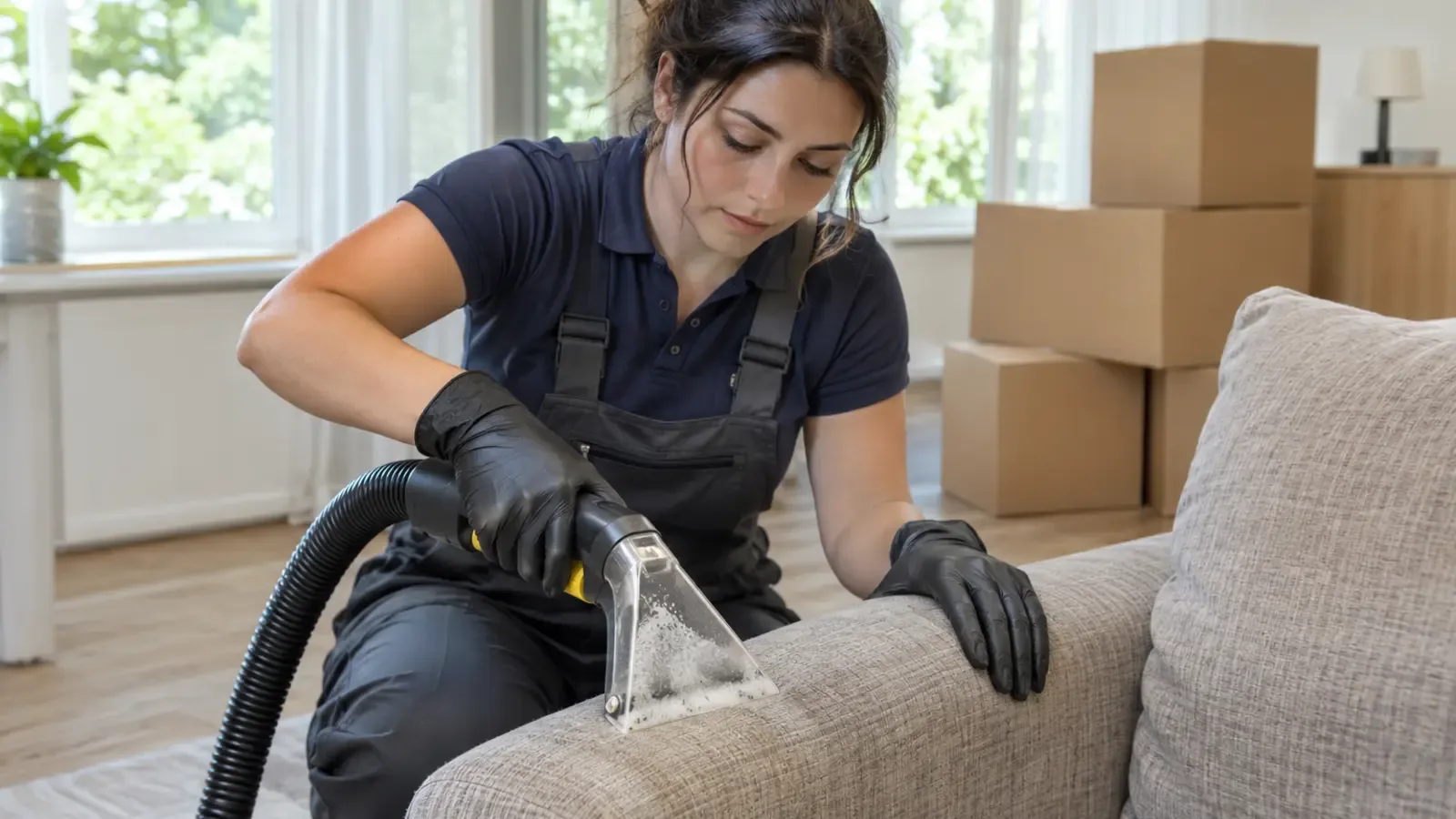
A sofa can carry more than cushions into a new home. Dust settles in seams, body oils collect on arms and headrests, crumbs work beneath the deck, and pet or smoke odors may remain in fabric and padding. Once the sofa enters a clean, mostly empty room, those familiar smells can be much easier to notice.
Sofa cleaning before moving usually makes sense when the piece has ordinary household soil, and there is enough time for it to dry completely.
Cleaning after the move may be wiser when the sofa will spend time in storage, travel in wet weather, or arrive before you can give it a protected place to dry. The deciding factor is whether you can complete the whole sequence: inspect, clean, dry, protect, move, and recheck.
First Decide Whether the Sofa Is Worth Moving
Cleaning cannot correct every odor or structural problem. Make the keep-or-replace decision before you pay to clean, wrap, and transport a piece that may not suit the new home.
Check the sofa from top to bottom, not only across the seat cushions. Remove throws and loose covers, lift the cushions, look into crevices, and inspect the dust cover and frame underneath. Note loose joints, broken support, crumbling foam, dye transfer, old water marks, and areas that remain damp or smell musty.
Also measure the sofa and the path into the new home. A large sectional with tired cushions and persistent odor may not justify cleaning and moving costs if it will not fit the next room. A well-built piece with sound framing and routine soil may be a good candidate for professional furniture cleaning.
Treat a damp or musty odor differently from ordinary stale fabric. The EPA advises investigating moldy or musty odors for possible past or present moisture.
If the sofa was affected by a leak, floodwater, sewage, or visible mold, routine upholstery cleaning is not the starting point. The water source, depth of wetting, and condition inside the cushions and frame need separate evaluation.
Clean Before or After the Move Based on What Happens Next
There is no useful one-size-fits-all answer. Choose the point in the move when the sofa can be cleaned correctly, dried without pressure, and kept clean afterward.
Clean Before Moving When the Trip Can Stay Clean and Dry
Pre-move cleaning works well when the sofa has accumulated everyday soil, the mover will use clean protective materials, and the item can dry fully before wrapping. It also lets you inspect the piece in familiar lighting and address stains while you still know their history.
Do not schedule wet cleaning for the final hours before loading. Drying time varies with the fabric, cushion construction, cleaning method, airflow, temperature, and humidity. Ask the cleaner for a condition-specific estimate, then leave a buffer rather than treating the earliest estimate as the wrapping time.
Clean After Moving When Transit May Re-Soil the Fabric
Post-move cleaning can be the better choice when the sofa will pass through dusty storage, ride in a truck with uncertain blankets, or be exposed to rain and repeated handling. It may also be practical when the old home does not have enough airflow or time for proper drying.
The tradeoff is that old soil enters the new home. Reduce that problem by vacuuming the sofa thoroughly before it leaves, using clean covers, and placing it on a clean, dry surface at the destination until full cleaning can be completed.
Use Two Cleaning Appointments Only When Both Solve a Real Problem
Most sofas do not need two full cleanings. A pre-move deep clean followed by a post-move inspection and light vacuuming is often enough. A second professional cleaning is more reasonable if storage or transit added visible soil, a spill occurred, or an odor appeared after the sofa was unpacked.
Match the Cleaning Method to the Upholstery
Fabric that looks durable can still react badly to the wrong chemistry or too much moisture. The care label, usually under a cushion or beneath the frame, is the first checkpoint.
Read the Code Before Adding Any Liquid
Common labels use W for water-based products, S for solvent-based products, W-S or S-W for either category under the manufacturer’s instructions, and X for vacuuming or light brushing only. Manufacturer directions can be more specific than the letter itself.
La-Z-Boy, for example, advises against liquid or foam cleaners on X-coded fabric and warns against saturating other upholstery types.
Vacuum loose soil first, including seams, tufting, cushion edges, the platform under the cushions, and the accessible underside. The EPA includes routine vacuuming of fabric-covered furniture in its household guidance. Use a suitable upholstery attachment and gentler suction on delicate, loose, or damaged textiles.
Let the Odor Source Determine the Scope
An odor on the face fabric may improve with cleaning, but odor can also remain in cushion foam, batting, decking, unfinished frame materials, or residue from repeated pet accidents. Smoke odor, urine, fragrance buildup, and mustiness are different problems. Covering any of them with a stronger scent does not show that the source has been removed.
Tell an upholstery cleaning service what caused the odor, what has already been applied, and whether the sofa has ever been wet. That history helps the cleaner assess fiber type, colorfastness, construction, stain behavior, and realistic limits.
The current ANSI/IICRC S300 professional standard includes pre-cleaning and post-cleaning inspection, cleaning methods, spot and stain removal, leather cleaning, and material construction among its core subjects.
Protect the Clean Sofa Through the Move
A good cleaning result can be undone during handling. Packing and transport determine whether the sofa reaches the new room in the condition you prepared it.
Confirm It Is Dry Before Wrapping
Check the slowest-drying areas, including cushion seams, lower skirts, the deck beneath the cushions, and any treated spots. A dry face fabric does not automatically mean thick cushions are ready to be enclosed. Do not wrap the sofa while any area still feels damp or unusually cool.
Keep Moving Materials From Becoming the New Soil Source
Ask whether the moving blankets and covers are clean and dry. Remove loose pillows and throws and pack them separately. The Home Depot recommends moving blankets or stretch wrap according to the material and specifically notes that delicate surfaces such as leather should be protected from direct contact with stretch wrap.
Use wrap as transit protection, not as a cure for odor or dampness. Keep packing tape and adhesive off the upholstery, and do not place the sofa directly on a dirty truck floor, wet driveway, or freshly cleaned carpet that has not dried.
Unwrap, Inspect, and Ventilate at the New Home
Remove transit protection once the sofa is safely indoors instead of leaving it sealed by habit. Check the bottom, legs, corners, cushions, and high-touch areas for new marks or dampness. Vacuum light transit dust if needed, then give the piece airflow before positioning it tightly against a wall.
For sofa cleaning in Tallahassee before a move, we offer upholstery cleaning in Tallahassee for homes and commercial properties. Schedule the service early enough to allow complete drying before the sofa is protected for transit.
Let the New Room Start With a Verified Clean Sofa
The best time to clean is the point when you can control both sides of the job: what the cleaning removes and what touches the sofa afterward.
Decide whether the piece is worth moving, use a method appropriate for its care label and construction, allow full drying, and protect it with clean materials. If transit adds new soil, inspect first and clean again only to the extent the new condition requires.
Frequently Asked Questions
How many days before moving should I have a sofa cleaned?
There is no universal number of days because drying time depends on the fabric, cushion density, method, airflow, temperature, and humidity. Ask for a project-specific drying estimate and schedule a buffer so the movers are never waiting on damp upholstery.
Is it better to clean a couch before or after moving?
Clean before moving when the sofa has ordinary household soil, can dry fully, and will travel under clean, dry protection. Clean after moving when storage, rain, dusty handling, or uncertain moving blankets are likely to soil it again. A pre-move vacuum plus post-move professional cleaning is a reasonable compromise when transit conditions are unclear.
Can I use a carpet-cleaning machine on my sofa?
Only if the sofa manufacturer permits that method and the machine, tool, and product are intended for the upholstery. A W code does not automatically approve every water-based machine or steam process. Avoid experimenting immediately before a move, when there is little time to correct browning, rings, texture changes, dye bleeding, or slow drying.
Why does the odor return after the sofa has been cleaned?
The treatment may not have reached the material holding the odor, or moisture may have temporarily changed how strongly you noticed it. Cushion cores, batting, the deck, frame materials, and repeated pet-accident areas can require a different scope from the face fabric. A returning musty odor also warrants a moisture investigation.
Can moving blankets make a clean sofa smell dirty again?
They can transfer dust, moisture, or odors if they are soiled or damp. Ask the mover about clean protective materials, and inspect the sofa after unpacking. Leather and delicate finishes may also need a blanket barrier so stretch wrap does not touch the surface directly.
Should I leave the sofa wrapped after it reaches the new home?
Usually no. Once the sofa is safely inside, remove the transit covering, inspect for dampness and marks, and let the piece ventilate. Long-term storage has different covering requirements, so use a material-appropriate breathable cover and follow the storage provider’s guidance rather than leaving transit wrap in place automatically.
Is professional cleaning worth it for an older sofa?
Consider the frame and cushion condition, replacement value, sentimental value, fit in the new room, moving cost, and likely odor source. Cleaning is easier to justify when the structure is sound, and the problem is cleanable soil. Replacement may make more sense when the frame is failing, the piece will not fit, contamination is involved, or deep odor remains impractical to address.