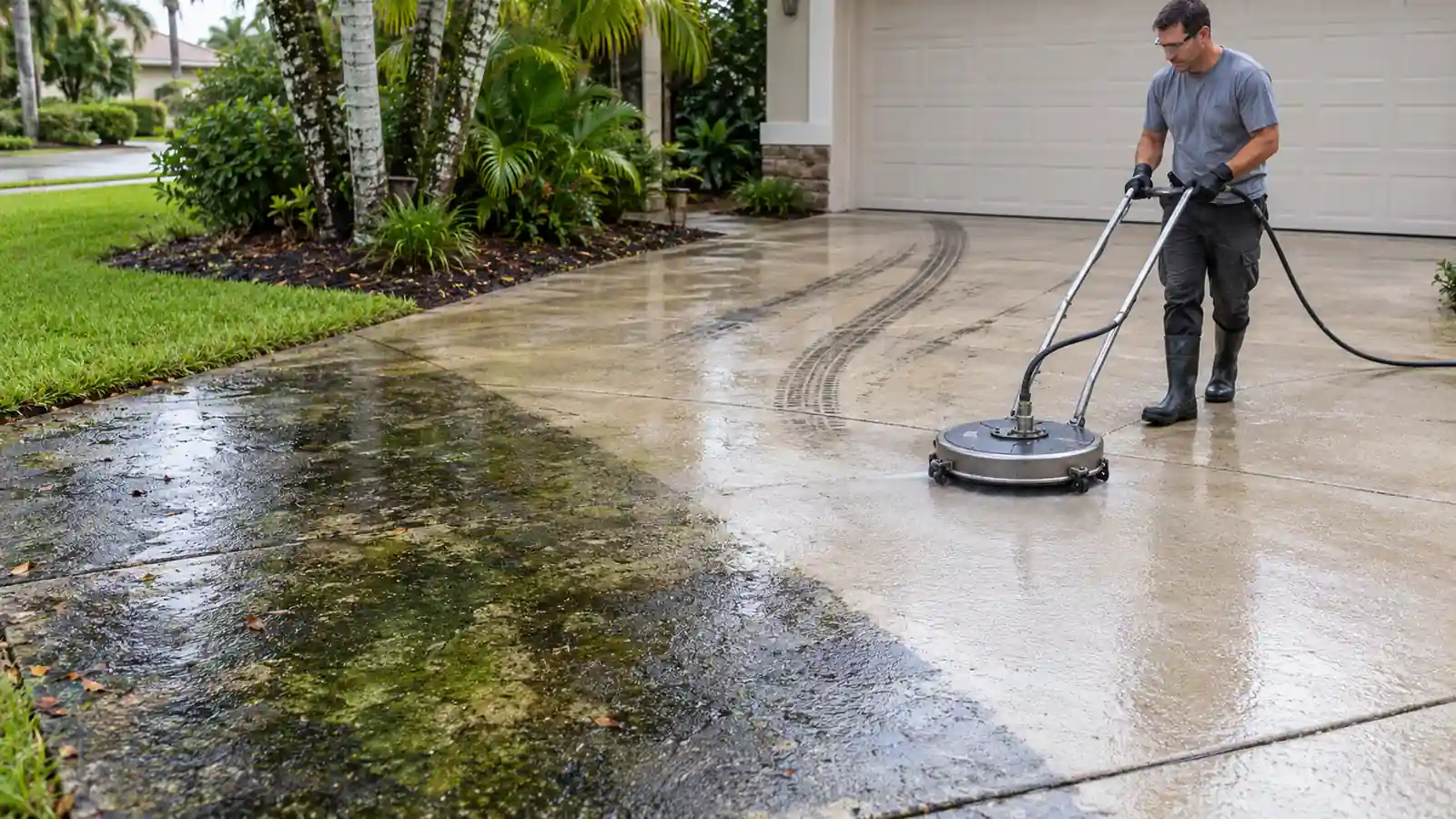
Black stains on driveway concrete can look nearly identical from a distance. Up close, however, a slick patch near a shaded edge is very different from a curved tire mark or a dark area beneath decaying leaves.
That difference matters in North Florida. Frequent rain, humid conditions, shade, storm debris, vehicle traffic, and runoff can create several types of driveway discoloration at the same time. A driveway may have organic growth near the lawn, tire transfer near a parking space, and leaf staining beneath a tree.
Before you reach for a pressure washer or cleaner, identify what probably caused the stain. The right diagnosis can prevent wasted cleaning attempts and unnecessary stress on the concrete.
Why Black Stains on Driveway Concrete Are Easy to Misidentify
Dark concrete does not reveal its cause by color alone. Location, texture, pattern, moisture, and how the stain changes after drying provide better clues.
Start With Location and Pattern
Look at where the discoloration appears.
Black arcs, parallel streaks, or marks that line up with vehicle movements suggest tire transfer. Irregular dark areas under trees or beside landscaping may point toward decomposing leaves and other organic material.
Dark green-to-black buildup in shaded areas that stay damp deserves a closer look for algae. Moisture and shade favor algal growth, and wet algae can become slippery. If you are dealing with a slippery algae on sidewalk problem as well as driveway staining, recurring moisture should be part of the investigation.
A broader guide to what pressure washing can remove from exterior surfaces explains why algae, storm residue, soil, leaf material, and ordinary traffic grime should not automatically receive the same treatment.
Check the Surface When It Is Dry
Wet concrete naturally appears darker.
- Let the area dry before deciding how severe the stain is.
- Then compare the affected section with nearby concrete.
- Look for a film, defined streaks, brown-black leaf outlines, greasy centers, or differences in texture.
- This simple inspection can tell you more than immediately applying stronger pressure.
Is the Black Stain Algae or Moisture-Related Growth?
Algae becomes more likely when dark discoloration follows a pattern of shade, repeated wetting, or slow drying.
Look for Damp, Shaded Trouble Spots
Algae often develops where moisture persists. Driveway edges beside dense landscaping, shaded walkways, areas near irrigation, and low spots that dry slowly deserve attention.
The stain may appear green, dark green, or almost black. When wet, growth may feel slick rather than simply dirty.
North Florida’s humid, rainy conditions make exterior buildup a practical maintenance concern. Spring pressure washing before algae takes over can help you understand how seasonal moisture, shade, and grime interact around exterior surfaces.
Cleaning Is Only Half the Decision
Removing visible buildup does not correct the condition that encouraged it.
If the same area repeatedly darkens, check for sprinkler overspray, drainage patterns, runoff, dense shade, or other sources of frequent wetting. Correcting an obvious moisture pattern may help the area dry more consistently.
For compatible exterior surfaces, residential pressure washing can address dirt, mold, grime, driveways, sidewalks, and other exterior areas.
Tire Marks Have a Different Pattern
Tire staining usually follows vehicle movement, parking, turning, acceleration, or braking rather than moisture patterns.
Look for Arcs, Tracks, and Parking-Space Marks
Tire marks commonly appear as curved black lines, short scuffs, or dark areas where vehicles repeatedly stop and turn.
The discoloration can involve rubber residue. On some sealed concrete, tire components can also interact with the sealer. That distinction matters because cleaning surface residue is different from correcting discoloration within a finish.
Do not assume that more pressure will solve every stubborn tire mark.
Test Before Escalating the Cleaning
-Begin with the least aggressive method suitable for the concrete and any existing finish. Test an inconspicuous area before treating a large section.
-If you are unsure whether pressure washing fits the condition of the surface, review the considerations in does my home need pressure washing. Different exterior materials and finishes can respond differently to concentrated pressure.
-If dark driveway stains keep returning or you cannot tell whether you are dealing with algae, traffic grime, tire residue, or general exterior buildup, consider professional driveway pressure washing in Tallahassee before repeatedly increasing pressure or trying stronger cleaners.
-Start by identifying the stain and checking the condition of the concrete so the cleaning approach can match the surface and the type of buildup.
Organic Buildup Can Leave Dark Shadows Behind
Leaves, soil, plant debris, pollen, and storm runoff can accumulate together, especially near trees, landscaping, and drainage paths.
Look Under Leaves and Along Runoff Paths
A pile of wet leaves can hold moisture against concrete. As organic material decomposes, it can leave brown or black discoloration even after you sweep the debris away.
Stormwater can complicate the pattern by moving soil, leaf fragments, mulch, and grime across the slab. This often produces irregular stains rather than the predictable lines associated with tires.
If storm debris has created several kinds of exterior residue, post-storm buildup and cleaning methods provides useful context on why cleaning methods should match both the buildup and the underlying surface.
Sweep First, Then Reassess
Remove loose leaves, dirt, twigs, and grit before washing. Let the concrete dry and inspect it again. This helps separate removable debris from staining that has remained in the porous surface.
When Dirty Concrete Will Not Come Clean
Repeated cleaning failure often means the stain has been misidentified or the discoloration extends beyond loose surface dirt. Concrete is porous. Some substances can penetrate beyond the material you see on top.
This is particularly relevant to oil stains on commercial concrete, vehicle-fluid spots, old organic staining, and certain tire marks. Pressure alone may remove surrounding dirt while leaving a darker shadow behind.
If dirty concrete will not come clean, stop treating higher pressure as the automatic next step. Consider:
- whether the stain is oily rather than organic;
- whether the concrete is sealed or coated;
- whether the discoloration remains after complete drying;
- whether previous cleaning changed the surface appearance;
- whether runoff keeps depositing new material; and
- whether several stain types overlap.
Commercial parking areas, service paths, loading zones, and customer approaches can accumulate traffic grime alongside oil and organic debris. That combination may require stain-by-stain evaluation rather than one treatment for the entire slab.
A Better Way to Inspect Black Driveway Stains
Use a simple sequence to narrow down the cause before deciding how the concrete should be cleaned.
- Sweep the area. Remove leaves, soil, mulch, and loose debris.
- Let the slab dry. Wet concrete can disguise the true stain pattern.
- Study the shape. Tire marks tend to follow vehicle movement. Organic stains are usually irregular.
- Check moisture conditions. Shade and repeated wetting make algae more plausible.
- Look for oil. Vehicle-fluid stains may have concentrated dark centers or appear where vehicles sit.
- Check the finish. Sealed, coated, decorative, or previously treated concrete may need extra care.
- Test a small area. Do not make an entire driveway your experiment.
- Reassess after cleaning. A remaining shadow does not automatically mean more pressure is needed.
Prevent the Same Black Stains From Returning
- Cleaning works better as part of routine exterior maintenance than as a repeated reaction to the same unresolved condition.
- Keep leaves and organic debris from sitting on concrete for long periods. Watch where irrigation repeatedly wets shaded pavement. Correct obvious drainage or runoff issues where practical.
- For tire and oil staining, monitor frequent parking and vehicle-service areas. Address fresh spills promptly rather than allowing residue to remain on porous concrete.
- Most importantly, identify recurring stains instead of treating every dark patch as ordinary dirt. Algae, tire residue, oil, storm grime, and decomposing vegetation may all look black, but they tell you different things about the surface.
- Once you know what you are looking at, you can make a much better cleaning decision.
Frequently Asked Questions
What causes black stains on driveway concrete?
Several things can cause them, including algae, tire residue, vehicle fluids, decaying leaves, storm-carried grime, and accumulated organic material. Location and stain pattern usually provide better clues than color alone. Let the concrete dry before evaluating it.
How can I tell whether a black driveway stain is algae?
Check whether the stain occurs in a shaded area that stays damp or receives repeated irrigation. Algae can appear dark green or nearly black and may feel slick when wet. Recurring moisture in the same location strengthens the likelihood of organic growth.
Why does my driveway develop black tire marks?
Tires can leave rubber-related residue during turning, braking, acceleration, or repeated parking. Marks often appear as arcs, tracks, or concentrated scuffs. On sealed concrete, some discoloration can involve the finish rather than loose material sitting only on top.
Can pressure washing remove every black driveway stain?
No. Surface dirt and some exterior buildup may respond well, while oil, embedded discoloration, tire-related marks, or staining within a coating can behave differently. More pressure is not automatically the correct solution when a stain remains.
Why does algae keep returning after I clean my concrete?
Recurring growth often means the surrounding conditions still favor moisture. Check shade, irrigation, drainage, runoff, and areas that remain wet longer than the rest of the driveway. Cleaning removes buildup, but recurring wetness may continue supporting its return.
Why is there slippery algae on my sidewalk?
Algae commonly favors moist areas and can become slick when hydrated. Shaded sidewalks, slow-drying pavement, and areas exposed to repeated water may develop dark or green growth. Treat the moisture pattern as part of the maintenance problem rather than focusing only on appearance.
Why do wet leaves leave dark stains on concrete?
Leaves can hold moisture against porous concrete while organic material breaks down. After the leaves are removed, brown or black discoloration may remain. Sweep away debris first, allow the slab to dry, and then evaluate what staining remains.
Are oil stains on commercial concrete the same as ordinary dirt?
No. Oil and grease behave differently from loose dirt or organic debris and may penetrate porous concrete. Parking stalls, loading areas, service zones, and drive lanes can contain several stain types simultaneously, so identifying each one before cleaning is important.
Why does my concrete still look dirty after washing?
The remaining discoloration may not be loose dirt. It could be embedded organic staining, oil, tire transfer, a coating issue, or a difference created by uneven cleaning. Wait until the concrete dries completely before judging the result.
Can storm runoff create black driveway stains?
Yes. Runoff can redistribute soil, leaves, mulch, grit, and other exterior debris across concrete. Low areas and drainage paths may develop repeated dark outlines or irregular patches after storms, particularly where debris remains wet.
Should I use maximum pressure on stubborn concrete stains?
Not automatically. Excessive pressure can create an uneven appearance or affect surfaces and finishes. Identify the stain first, check whether the concrete has a coating or sealer, and test the cleaning approach in a small inconspicuous area.
When should I consider professional driveway pressure washing?
Consider it when staining covers a large area, different types of buildup overlap, previous cleaning has produced uneven results, or you cannot identify what is causing the discoloration. Surface condition and stain type should guide the cleaning approach.