After a fire, the room with the darkest soot is not automatically the only place with meaningful smoke damage. Smoke can move away from the burn area, settle unevenly, reach materials that react differently, and combine with firefighting water or indoor humidity.
That means smoke damage cannot be judged by one black wall, one odor, or one room. A better way to understand the loss is to follow five questions:
- What burned?
- Where did the smoke travel?
- What did it land on?
- Was moisture involved?
- What changed afterward?
Smoke Damage Is a Chain, Not a Stain
Smoke damage starts with the fire, but its effect depends on what happens between combustion and the material that receives the residue. Two surfaces in the same house can therefore need very different decisions. Technical fire-assessment guidance likewise treats smoke impact as a property-and-material assessment problem rather than something determined by appearance alone.
What Burned?
Wood, paper, food, plastics, finishes, wiring, and furnishings do not produce identical combustion byproducts. Residue can differ in how it deposits, smells, stains, or affects a surface.
That is why a universal “smoke cleaner” is a poor starting point. The fire source helps explain the residue, but it does not tell you how every surface should be treated.
Where Did the Smoke Travel?
Smoke does not respect the boundary of the room where the flames were located. Doorways, stairwells, gaps, vents, and mechanical systems can become pathways, which means a room without flame damage can still deserve attention.
The useful question is not simply, “Was this room near the fire?” It is, “Was there a plausible pathway here, and is there evidence that residue or odor followed it?”
What Did It Land On?
A painted wall, unfinished wood, a sofa cushion, a metal fixture, and a circuit board do not respond to the same exposure in the same way.
Some materials mainly show surface deposition. Others can retain odor or residue within fibers and pores. Electronics add another concern because deposited smoke can affect electrical performance as well as corrosion.
Was Moisture Involved?
Firefighting water, sprinkler discharge, condensation, or high indoor humidity can change material conditions after smoke exposure.
Moisture matters especially around metals and electronics. Humidity can significantly influence corrosion behavior after smoke exposure.
What Changed Afterward?
New odor in a closed room, residue around a vent, discoloration on a finish, or unusual behavior from an exposed electronic item can all be useful observations.
They are clues, not diagnoses. Their value is in showing where a closer assessment should focus.
Why Visible Soot Is a Poor Damage Map
Visible residue is useful evidence, but it is not a complete map of where smoke went. The same applies to odor. What you see and smell should guide questions, not settle the entire scope.
ObservationWhat it can tell youWhat it cannot proveDark residue on a surfaceCombustion residue may have deposited thereNearby surfaces are affected the same waySmoke odor in a roomSmoke-related compounds may remainThe room must be gutted or every item discardedNo visible stainingHeavy visible deposition is not obviousNo smoke reached the roomResidue near a ventThe vent area was exposedThe entire HVAC system has the same impactA closed doorDirect air exchange may have been lowerThe room was completely protected
Odor deserves particular caution. Smell can alert you that something remains, but odor intensity by itself does not measure the amount or significance of an exposure.
Cleaning only the darkest surfaces can miss other affected materials. Treating every item in the house as equally damaged can be just as inaccurate.
Different Materials Fail in Different Ways
Instead of asking whether an item is simply “smoke damaged,” ask what the exposure did to that material.
Finished Hard Surfaces
Painted walls, glass, tile, counters, and finished wood may show films, staining, or residue. Whether a surface can be cleaned without changing its finish depends on the material, finish, residue, heat exposure, and cleaning method.
Soft and Absorbent Contents
Carpet, upholstery, clothing, drapes, paper, unfinished wood, and other absorbent materials can retain smoke-related compounds differently from sealed surfaces. Odor may remain after obvious surface soil is gone.
That does not mean every porous item must be discarded. Salvage is a material-and-condition decision, not a blanket rule.
Electronics and Metal Components
Electronics deserve a separate decision because damage is not limited to what can be seen on the casing.
The NIST review of fire-smoke effects on electrical equipment identifies smoke deposition, current leakage, and corrosion as potential mechanisms of electrical-equipment damage.
If a device was meaningfully exposed to smoke, heat, or firefighting water, do not use normal operation as the test for whether everything inside is unaffected. Questionable equipment should be evaluated appropriately before you rely on it.
HVAC and Hidden Pathways
Vents, returns, attics, cavities, and other air pathways can connect areas that look unrelated to the living space.
That does not mean every fire requires the same duct-cleaning scope. A useful assessment asks whether the system operated, where evidence of residue is present, and which connected spaces were actually exposed.
Water Can Change the Smoke-Damage Picture
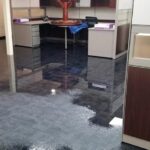
A fire can leave heat damage, smoke residue, and water damage at the same time. Water can affect wood, drywall, flooring, furniture, and other contents independently of smoke, while higher moisture can increase corrosion concerns for some smoke-exposed metals and electrical components.
If firefighting water reached floors, walls, or contents, the water side of the loss needs its own assessment. Our guide to the first 60 minutes after water damage explains why visible surface water may be only part of a moisture problem.
What a Useful Smoke Assessment Should Answer
A good assessment should reduce uncertainty, not simply produce a longer list of everything that smells smoky.
For each affected area, useful questions include:
- What burned, and what is known about the fire?
- What pathways could have carried smoke here?
- What residue, odor, or material changes are actually present?
- Which materials or contents need separate decisions?
- Did water, sprinklers, or humidity complicate the exposure?
- Are electronics, HVAC components, or concealed spaces part of the concern?
- Which items are candidates for cleaning, specialist evaluation, or replacement, and why?
This makes restoration recommendations easier to understand because each response connects an observed condition to a material and a reason.
For confirmed smoke residue or persistent odor after a fire, look into our smoke damage and odor control service.
When the Fire Is Out but the Impact Remains
The impact of smoke damage is not defined by how dramatic the fire looked. A smaller fire can still create a complicated cleanup if smoke reaches sensitive materials, while a visibly dirty surface may be comparatively straightforward once its residue and finish are understood.
It is not about, “How much soot can I see?”
It is about, “What burned, where did the smoke go, what did it reach, and what changed because of that exposure?”
That turns smoke damage from a vague post-fire problem into a series of material-specific decisions. It gives homeowners a better basis for understanding what needs ordinary cleaning, what needs specialist evaluation, and what belongs in the broader fire-restoration plan.
Frequently Asked Questions
Can smoke affect a room without leaving visible soot?
Yes. Visible soot is one form of evidence, but smoke movement and deposition are not always uniform. A room can warrant closer assessment because of its location, air pathways, contents, odor, or other observations even when heavy staining is absent.
Does a stronger smoke odor mean more damage?
Not necessarily. Odor can be a useful clue that smoke-related compounds remain, but smell alone does not measure the amount of contamination or tell you whether a particular material can be restored.
Can smoke damage electronics that still turn on?
Smoke exposure can affect electrical equipment through deposited particles and corrosion, and some effects may not be obvious from the exterior. Whether a particular device remains usable requires an equipment-specific assessment rather than simply switching it on to see what happens.
Does every smoke-exposed item need replacement?
No. The decision depends on the material, type and extent of exposure, heat or water involvement, condition of the item, and whether an appropriate restoration method can achieve the required result.
Can firefighting water affect smoke-damage decisions?
Yes. Firefighting water can create a separate moisture problem in floors, walls, furniture, and other materials. Moisture may also influence corrosion in some smoke-exposed metals and electrical components.
When is it safe to inspect smoke damage yourself?
Do not enter a fire-damaged home until the appropriate authorities say it is safe. The U.S. Fire Administration’s after-fire guidance specifically advises residents not to enter a damaged home until the fire department has cleared it.