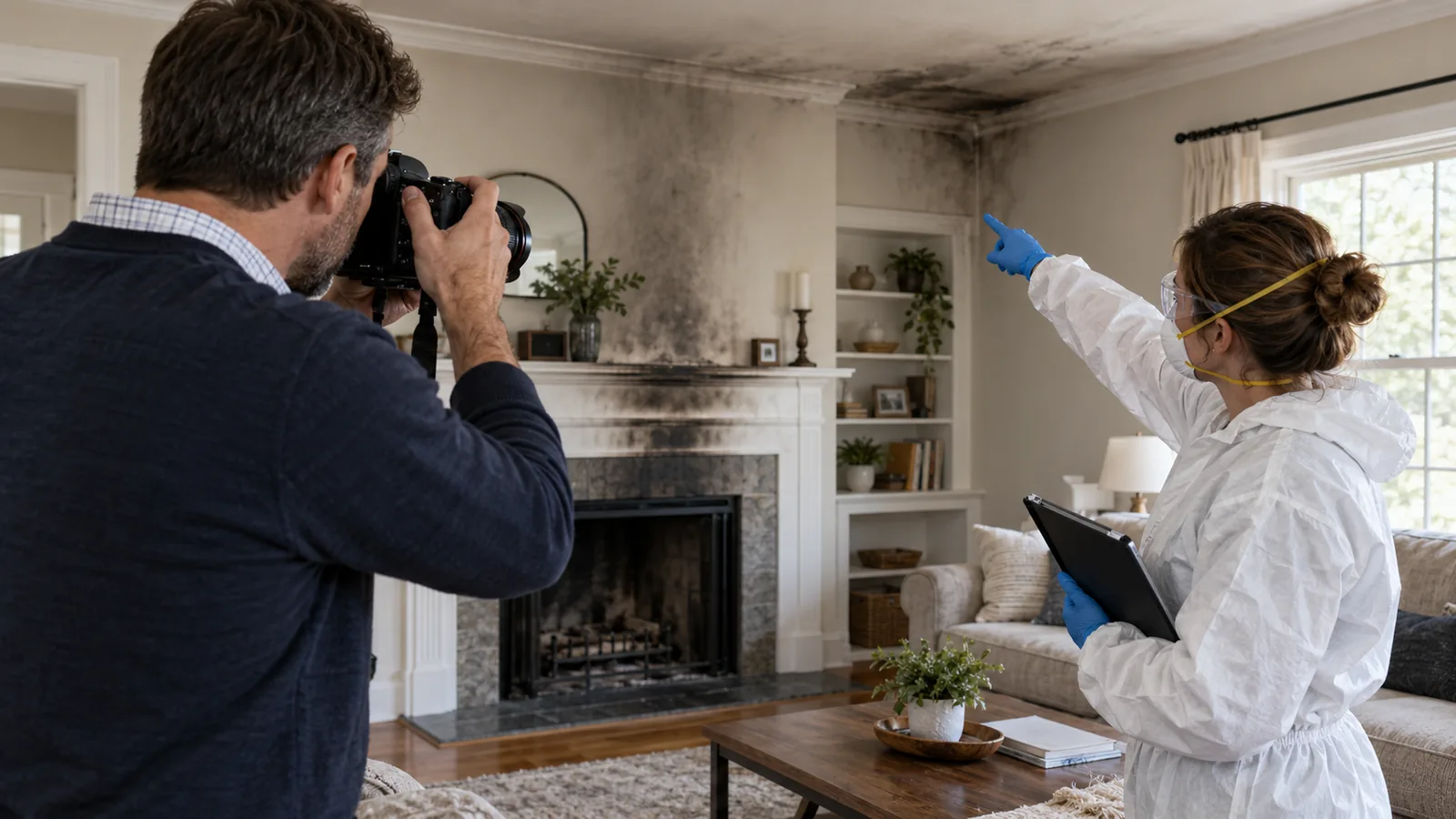
The kitchen may show the burn marks, while your bedroom holds the lingering smell. Or smoke from a nearby fire may enter your home without flames crossing the property line. In wooded Tallahassee-area neighborhoods, Florida’s drier periods bring additional wildfire concerns.
Does insurance cover smoke damage when the room itself never burned? Often, yes. Many homeowners policies cover sudden, accidental smoke damage. However, the cause, policy wording, exclusions, deductible, and documented damage determine what a claim may pay. An unburned room is not automatically an undamaged room.
Why Smoke Damage Can Extend Beyond the Burn Area
Smoke follows air movement rather than room boundaries. Damage can appear away from the original fire.
Residue may settle on walls, ceilings, furniture, and belongings. Vents can carry smoke into other rooms, while carpets and upholstery can retain odors. These smoke damage concerns deserve attention even when surfaces show no charring.
Distinguish the event from the resulting damage. A nearby fire establishes a possible source, but your claim should describe what happened inside your property. Record staining, residue, affected possessions, and persistent odors without assuming every room needs identical treatment.
What Insurance May Cover in an Unburned Room
Homeowners and renters policies typically cover wildfire smoke, soot, and ash damage. Coverage still depends on your contract and the circumstances.
A room does not need char marks for smoke damage to be considered. However, a nearby fire does not automatically establish a payable loss. Ask what evidence your insurer needs to evaluate residue, odor, and affected materials.
Building Materials and Personal Belongings
Dwelling coverage may apply to affected walls, ceilings, and other insured building components. Personal property coverage may address damaged furniture, clothing, and electronics. Necessary cleaning, repair, or replacement depends on the loss and policy terms.
Check your deductible and payment basis. Actual cash value generally accounts for depreciation. Replacement-cost coverage works differently and may require repair or replacement before additional payment.
If you rent, report building damage to your landlord and belongings damage to your renters insurer. Do not assume the landlord’s policy protects your possessions.
Temporary Housing and Business Disruption
Additional living expense coverage may help with necessary increases in living costs when covered damage makes your home unfit to occupy. Ask about eligibility, limits, and receipts before assuming a hotel stay qualifies.
Commercial property claims need a separate review. Building damage, business-owned contents, and lost income are different coverage questions. Business interruption benefits depend on applicable coverage and triggering conditions, not simply a decision to close.
Document the Damage Before Cleanup Changes It
- Clear records connect the incident, affected materials, and proposed work.
- Prioritize safety before collecting evidence.
- If damage creates electrical or structural concerns, leave assessment and protective work to qualified professionals.
- Do not enter a restricted area simply to photograph belongings.
Record the Incident and Affected Rooms
After authorities permit entry, document conditions without touching residue or entering unsafe areas:
- Photograph each affected room and take close-ups of visible deposits.
- Record the incident date, known smoke source, and where odors persist.
- List damaged belongings, approximate ages, purchase records, and locations.
- Save emergency-work invoices, accommodation receipts, and insurer communications.
Request an inspection that includes smoke-affected rooms beyond the burn area. A photograph cannot capture an odor, so add specific written observations. Describe what you notice without diagnosing contamination or inventing a cause.
Separate Urgent Protection From Permanent Repairs
- Notify your insurer promptly and ask what documentation your insurer needs before cleanup or disposal.
- Do not postpone reasonable emergency protection merely to wait for an adjuster.
- Photograph conditions first when safe and keep records of necessary work.
- Avoid nonurgent demolition, repainting, or discarding belongings before discussing inspection requirements.
- Understanding what to avoid during smoke cleanup also helps prevent unnecessary disturbance of damaged surfaces.
- If you need fire damage cleanup in Tallahassee, call 850-422-2227 to discuss fire and smoke cleanup needs.
- Stay outside any restricted or unsafe area, describe the affected rooms, and confirm coverage questions separately with your insurer before authorizing nonemergency work.
Match Smoke Damage Clean Up to the Actual Loss
A useful cleanup plan addresses affected materials, not just the strongest smell. An unburned room may need different work from the fire’s origin. Request an itemized scope that identifies each room, affected surfaces, proposed cleaning, and materials recommended for removal. Keep the work authorization separate from assumptions about reimbursement.
Residue Removal and Odor Control
Smoke damage removal and odor control can involve surface cleaning, stain treatment, and attention to smoke-affected soft furnishings. Masking an odor does not remove the residue causing it.
Do not repaint soot-covered surfaces as a shortcut. Discuss cleaning first, then determine whether finishing work remains necessary. Cleaning smoke-damaged materials requires methods suited to the surface and residue.
If a structure fire may have affected your HVAC system, seek qualified guidance before restarting it. During an ongoing outdoor smoke event, avoid opening windows just to air out the building.
Cleaning Versus Replacement
Neither automatic disposal nor automatic salvage fits every loss. Ask whether each item can be restored, what treatment is proposed, and why replacement may be necessary.
Porous materials and hard surfaces can respond differently. During smoke damage repair, document remaining odor, staining, or material damage after cleaning. A remaining smell calls for reassessment, not an unsupported promise that another treatment will work.
Where firefighting water is present, fire and smoke damage clean up should also address wet materials. Do not focus on odor while overlooking moisture.
What Can Limit or Complicate Coverage?
Coverage for a sudden smoke event does not make every smoke-related condition insurable.
Long-term tobacco residue or ongoing maintenance problems may fall outside coverage. Preexisting damage, exclusions, deductibles, and limits can also affect payment. Report the actual sequence of events rather than describing gradual buildup as a new incident.
If the proposed settlement excludes an affected room or item, ask for the reason in writing. Clarify whether the disagreement concerns coverage, the extent of damage, or the proposed repair cost. These are different issues.
Submit missing photographs, inventories, or itemized estimates when relevant. The Florida Department of Financial Services can help with unresolved Florida insurance concerns. No cleanup estimate guarantees an insurance payment.
Focus on the Damage, Not Just the Flames
An unburned room still deserves evaluation when smoke residue or persistent odor follows a fire.
Protect your safety, document the conditions, and separate cleaning decisions from coverage decisions. For future readiness, keep an updated belongings inventory and maintain smoke alarms. The useful question is not only whether flames reached the room, but what damage occurred and what your policy covers.
Frequently Asked Questions
Can wildfire smoke qualify for coverage without visible soot?
Potentially. Smoke damage does not always produce obvious black deposits on every affected surface. Document persistent odors, any visible changes, and the timing of the wildfire exposure. Your insurer must evaluate the reported damage under your policy; nearby smoke alone does not establish what payment is due.
Does insurance cover smoke damage from a neighbor’s fire?
Your own property policy may cover resulting smoke damage even when the fire started elsewhere. Report the incident to your insurer and identify the affected rooms and belongings.
Do not assume you must wait for your neighbor’s claim or that the neighbor’s insurer automatically owes payment.
Is a smoke smell alone enough to get a claim approved?
A persistent smell deserves documentation, but it does not guarantee approval or establish the full cleanup scope. Record where the odor occurs and whether it began after the incident. Ask what additional inspection or evidence your insurer needs before assuming deodorizing, replacement, or other work will qualify.
Does renters insurance cover smoke-damaged furniture?
Renters insurance may cover cleaning, repair, or replacement of insured belongings damaged by a covered smoke event. The applicable limits, deductible, and valuation terms still matter.
Notify your landlord about building damage, but submit your own furniture and clothing inventory to your renters insurer.
Should you wait for the adjuster before starting cleanup?
-Contact your insurer promptly, document conditions when safe, and discuss inspection requirements.
-Do not delay reasonable emergency measures needed to prevent further damage.
-For nonurgent disposal, demolition, or permanent repairs, clarify what evidence your insurer needs before the work changes or removes it.
Will insurance replace every smoke-exposed carpet or sofa?
Not automatically. The decision depends on the actual damage, restoration feasibility, and applicable coverage.
-Ask for an item-specific explanation of proposed cleaning or replacement rather than treating every porous item alike.
-Keep photographs and records of any odor, staining, or damage that remains after treatment.
Can you run the air conditioner after smoke enters your home?
After a structure fire, seek qualified guidance before restarting equipment that may be damaged or contaminated. For drifting outdoor wildfire smoke, follow current air-quality guidance on filtration and recirculation instead of applying a blanket shutdown rule. Avoid bringing in smoky outdoor air simply to remove an indoor odor.
Will insurance pay for a hotel during smoke cleanup?
Additional living expense coverage may help when covered damage makes your home unfit to occupy. It generally addresses necessary extra living costs, not every expense you normally pay. Confirm eligibility and applicable limits with your insurer, and retain lodging, meal, and other relevant receipts.
What should property managers document in shared buildings?
-Record affected units, common areas, tenant reports, and restrictions on access.
-Keep building repair records separate from inventories of tenant-owned or business-owned belongings.
-For business-income losses, review the applicable coverage and triggering conditions instead of assuming a building damage claim also pays for operational disruption.
What happens if the smoke smell remains after cleaning?
-Document the remaining odor by room and explain when you notice it.
-Request reassessment of affected materials and any areas the original cleanup did not address.
Additional work or replacement may warrant consideration, but neither repeat treatment nor further insurance payment is automatic.
What if smoke-damaged materials are also wet from firefighting?
-Document smoke residue and wet materials separately so neither problem disappears from the cleanup plan.
-Water extraction and drying may be necessary alongside soot removal and odor control.
-Ask how your policy treats each part of the loss, and do not assume every resulting repair qualifies for reimbursement.