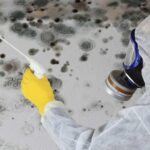
Professional mold removal should not be a fixed sequence that starts the moment someone sees a dark patch on a wall.
A good remediation project should be able to answer four questions before it moves forward:
- Do we understand the moisture problem?
- Is the work area controlled?
- Does each affected material have a defensible cleaning or removal decision?
- Is the area actually ready to be closed back up?
That turns the process from a list of equipment into four checkpoints you can understand and ask about.
Step 1: Prove the Moisture Problem
Before moldy material is disturbed, the first job is understanding why the area became wet enough to support growth.
That may involve a plumbing leak, roof intrusion, condensation, repeated high humidity, an appliance failure, or moisture trapped inside a building assembly. EPA guidance places moisture-source identification and correction at the center of remediation planning because cleanup without moisture control can leave the conditions that allowed the problem to develop.
The scope also needs to account for the affected materials and the possibility of hidden growth. Mold behind drywall, beneath carpet, inside wall assemblies, or around HVAC components can change the remediation plan once discovered.
That is why a visible patch should not automatically define the entire job.
For example, our guide to mold beneath carpet backing explains why a dry-looking carpet surface does not necessarily describe what is happening in the pad or subfloor below.
A useful first step should therefore answer:
- What is supplying the moisture?
- Which materials are affected?
- Is hidden growth reasonably suspected?
- Has the moisture source been corrected or included in the repair plan?
- Does newly discovered damage require the scope to change?
A remediation plan may need revision when hidden mold or additional damage is found.
Step 2: Prove the Work Area Is Controlled
Removal can disturb moldy material and debris. Before that happens, the project should address how unaffected parts of the property and building occupants will be protected.
That does not mean every mold job needs identical containment.
EPA guidance bases containment decisions on the amount and condition of affected material, the likelihood that remediation work could spread contamination, and professional judgment. Larger or more disruptive projects may require stronger controls than a small, limited work area.
The homeowner-facing question is simpler:
What will keep the work itself from creating a wider cleanup problem?
That can include controlling access, isolating the work area where appropriate, protecting nearby contents, managing air movement, and using suitable worker protection.
HVAC deserves particular attention when it may be involved in the moisture or mold problem. EPA advises against operating a system known or suspected to be mold-contaminated until the situation is appropriately evaluated.
Containment is therefore not decorative plastic around a doorway. It is part of the logic of the job.
Step 3: Prove Every Material Decision
Once the work area is controlled, mold remediation becomes a material-by-material decision.
A moldy surface should not automatically be sprayed and kept. Nor should every exposed material automatically be discarded.
Materials That May Be Cleanable
Hard, nonporous surfaces can often be physically cleaned and dried when their condition allows it. The cleaning method should match the material, the amount of growth, and the broader remediation plan.
Materials That May Need Removal
Porous materials are different because mold can grow into spaces that are difficult to clean completely. Moldy porous materials may have to be discarded when they cannot be adequately cleaned.
Drywall, insulation, carpet backing, padding, and other absorbent materials therefore need individual evaluation rather than a universal “sanitize everything” approach.
That distinction matters because professional mold remediation is primarily about addressing affected material and moisture conditions, not simply applying a product intended to kill organisms.
If the problem appears limited to a shower surface but keeps returning, our guide to recurring shower grout mold shows why the correct decision may be surface cleaning, moisture correction, repair, or broader remediation depending on what is actually happening behind the visible finish.
A useful material decision should explain:
- What can remain and why?
- What needs physical cleaning?
- What cannot reasonably be restored?
- What needs removal before drying or rebuilding?
- Did opening the assembly reveal additional affected material?
If demolition reveals a larger problem, the plan should change. The scope should not stay frozen merely because the estimate was written before the wall was opened.
Step 4: Prove the Area Is Ready to Close
A cleaner-looking work area is not automatically a completed remediation project.
The moisture problem should be fixed, mold removal completed, mold-damaged materials addressed, and visible mold and moldy odors no longer present. The site should also show no continuing signs of moisture or renewed growth.
That creates a useful final checkpoint before reconstruction:
What evidence shows that the conditions which required remediation are no longer present?
Drying and Visual Conditions Matter
Materials that remain should be appropriately dry, the moisture source should be controlled, and the remediated area should be visibly clean of the conditions the project was intended to address.
Putting new drywall, flooring, insulation, or finishes over an unresolved moisture condition simply hides the question.
Testing Is Not Automatically Required
Mold sampling is not a universal final step.
When visible mold is present, sampling is often unnecessary, and there are no federal threshold limits for mold spores that turn one laboratory number into a universal pass-or-fail standard. Sampling can be useful in particular circumstances, but it should answer a defined question and be interpreted appropriately.
So a professional job should not be judged merely by whether someone took an air sample.
The better closeout questions are:
- Was the moisture source corrected?
- Were affected materials removed or cleaned according to the plan?
- Is the remaining structure appropriately dry?
- Is visible growth gone from the remediated area?
- Were additional problems discovered during work addressed?
- Is any required verification complete before reconstruction begins?
Only then does rebuilding become the next logical phase.
Florida Has a Separate Role Rule
Florida homeowners have another important consideration.
Under the 2026 Florida Statutes, mold assessment and mold remediation are separately defined regulated activities when the affected mold growth is greater than 10 square feet.
Florida law also generally prevents a mold assessor or the assessor’s company from performing remediation on a structure they assessed within the previous 12 months, and similarly restricts a remediator from performing the assessment on a structure they remediated. A statutory exception exists for certain Division I contractors.
That distinction matters when you are hiring mold remediation services because “assessment” and “remediation” are not merely two interchangeable marketing words in Florida.
It also does not mean every tiny surface spot requires a professional project. EPA says that mold areas smaller than about 10 square feet can often be handled by a homeowner in ordinary circumstances, while larger areas, extensive water damage, hidden mold, or complicated conditions may justify experienced professional help.
What to Ask Before Work Starts
You do not need to become a mold remediator to evaluate whether the proposed process makes sense.
Ask:
- What moisture source is driving the problem?
- How was the affected scope determined?
- What will be done before moldy materials are disturbed?
- Which materials can be cleaned and which need removal?
- What happens if hidden growth is found?
- How will drying and moisture correction be confirmed?
- What has to be true before reconstruction begins?
- Does Florida require a separate assessor or licensed individual for this project?
Clear answers should connect each action to a condition in the property.
That is a better indicator of a thoughtful professional mold remediation plan than a generic promise to spray, sanitize, or “remove every spore.”
If professional help is required, our mold removal and remediation service is an ideal option to consider.
The four steps are simple to remember: understand the moisture, control the work area, make material-specific decisions, and verify the result before closing the structure back up.
The important part is that each step should produce enough information to justify the next one.
Frequently Asked Questions
Is mold removal the same as mold remediation?
Not exactly. Mold removal describes removing affected mold or material. Remediation is broader and can include moisture correction, containment, cleaning, material removal, drying, and other preventive or corrective activities. Florida law specifically defines mold remediation for regulated work exceeding 10 square feet.
Does professional mold removal always require testing?
No. EPA says sampling is often unnecessary when visible mold growth is already present. Testing can be useful when it answers a specific question, but there is no federal mold-spore threshold that serves as a universal clearance number.
Does every moldy material have to be removed?
No. Material type and condition matter. Hard, cleanable materials may sometimes remain after appropriate cleaning and drying, while moldy porous materials can be difficult or impossible to clean completely and may require removal.
Why does the moisture source have to be fixed first?
Mold growth depends on moisture. Cleaning affected material without addressing the leak, condensation, humidity, or other moisture source leaves the condition that allowed the problem to develop. EPA therefore makes moisture control a central part of remediation planning.
Can the remediation plan change after work starts?
Yes. Hidden growth or additional water-damaged material may become visible once building materials are opened. EPA guidance specifically says the remediation plan should be revised if hidden mold or additional damage is discovered.
Who can perform mold remediation in Florida?
Florida regulates mold-related services and licenses individuals who perform covered mold assessment and remediation work. The legal requirements depend on the work and applicable statutory exemptions, so homeowners should verify the individual and scope rather than relying only on a company marketing claim.